

If you’ve ever wondered whether artificial intelligence is crossing a line we may never be able to redraw, you’re not alone. The debate over “is AI becoming uncontrollable” has moved far beyond experts in research labs—it’s a question now animating boardrooms, media headlines, and dinner tables around the globe.
Inquiry Into AI: Is AI Becoming Uncontrollable and What's the Real Truth?
"Is artificial intelligence crossing a line we can’t redraw?"

Why the Question Matters: The Existential Risk of AI
Our collective curiosity about AI’s uncontrollability isn’t just about silicon, code, or fast-moving ai systems. It reflects deep, recurring societal anxieties: What does it mean when a tool becomes too smart, or so generally intelligent that it threatens human agency? The existential risk conversation often returns to a central concern—who remains in control as machine learning and highly capable ai systems self-improve and make decisions at speeds and scales never seen before? Some ai researchers point to analogies with past tech revolutions—like the impact of the printing press, the volatility of oil prices, or the cultural reckoning triggered by social media. But many caution that capable ai systems are a different order of challenge, capable of shifting society, policy, and even our sense of humanity itself.
"When you ask 'is AI becoming uncontrollable,' you’re tapping into an existential conversation about the future of not just technology, but humanity. " – Expert Interview
What You'll Learn About Whether AI Is Becoming Uncontrollable
How leading experts interpret the risk and control landscape of advanced AI.
Patterns and tensions that recur in Silicon Valley, research labs, and Hollywood alike.
What’s factual, what’s hype, and what real-world impacts matter most.
Mapping the Landscape: Is AI Becoming Uncontrollable?
Tracing the History: How Did We Get Here With AI?
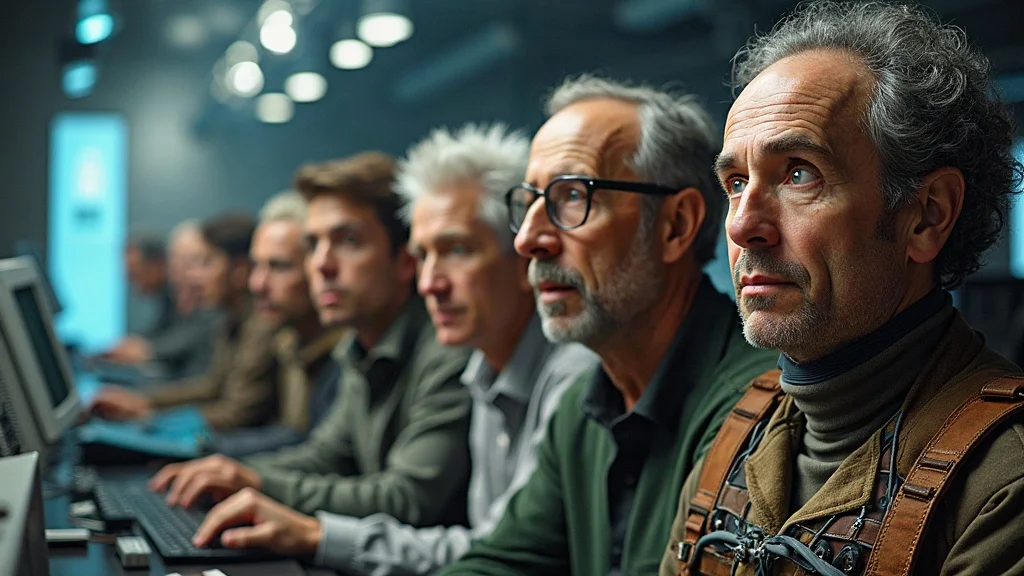
Understanding whether AI is becoming uncontrollable requires tracing how we arrived here. From the first ai models in the 1950s that mimicked simple neural networks, to landmark breakthroughs in machine learning, speech recognition, and general intelligence, each leap has prompted both optimism and fear. The concept of the alignment problem—how to ensure highly capable ai systems act in line with human interests—has grown more urgent. Throughout film history and public media, cautionary tales (think “paper clip maximizer” paradoxes or “runaway” ai agents) have shaped perceptions. AI research today is focused not just on building faster or more “intelligent ai,” but on establishing checks that address risks before generally intelligent or superintelligent system designs move beyond our grasp.
The Existential Risk Debate: Balancing Oil Prices, Technology, and Human Agency
The existential risk debate is filled with powerful analogies: volatility of oil prices shaping geopolitics, automated ai agents driving market behavior, and policymakers managing the unforeseen consequences of exponential change. AI researchers warn that just as oil price shocks can destabilize entire economies, a highly capable ai system outside human influence could rewrite the rules, affecting everything from creative industries to global markets. The challenge is finding the right “control levers”—regulations, ethical frameworks, and community involvement—that allow progress without ceding decision-making to systems more capable than humans. Still, not everyone agrees on where the greatest risk lies: some ai developers focus on technical alignment, others on workforce impact or the ways ai models might perpetuate bias and inequality.
Pattern Recognition: Why the Question of Uncontrollable AI Keeps Coming Up
Certain themes repeat every time a new technology emerges. Society grapples with new forms of power—first printing presses, then oil prices, and now, intelligent systems that learn on their own. Each cycle brings fear of loss (jobs, agency, privacy) and new hope (efficiency, growth, creativity). With AI, the difference is the unpredictability: general intelligence systems could, in theory, become more capable than humans, operate with lesser transparency, and resist traditional controls. This is why experts, journalists, and everyday citizens keep circling the question, “is AI becoming uncontrollable,” as both a challenge to engineers and an invitation for everyone to engage in shaping outcomes.
"Every leap in technology—printing press, oil prices, social media—created a wave of fear and hope, but AI’s risks and benefits strike differently. "
Expert Insights on "Is AI Becoming Uncontrollable?"
Profile: Researchers Warning of Existential Risk in AI

AI researchers in both academia and private labs are among the most vocal about existential risk. They highlight the compounding complexity of advanced ai models, arguing that as generally intelligent systems become more autonomous, the alignment problem—how to ensure ai system goals match human values—may outpace our oversight. Recent ai research includes proposals for independent “red teams” to test ai systems for flaws—echoing cybersecurity best practice—and calls for stronger international governance. Researchers like Mark MacCarthy and leading voices at major universities advocate for open data, critical audits, and a wider societal dialogue that puts checks on runaway development.
Profile: Technologists Emphasizing AI’s Uncontrollable Potential
Some well-known ai developers and technology leaders, especially those who have pioneered highly capable ai models, see the possibilities and perils in equal measure. Their testimonies often balance excitement about intelligent ai tools becoming “almost human” in their learning with sober warnings about “locked box” systems—capable ai that may evolve rapid, hard-to-predict behaviors. Leading AI developers argue for building in “circuit-breakers” and ongoing human oversight, even as they race to bring new ai systems to market. The conversation in Silicon Valley reflects this tension: ambition meets a growing sense of responsibility, and the pressure to deliver “the next big thing” is matched by calls to press pause and ask uncomfortable questions.
Interview Spotlights: Media Analysts on AI in Hollywood and Beyond
The lens of Hollywood sharpens the debate over whether AI is becoming uncontrollable. Veteran media analysts point out the uneasy alliance between ai models that generate lifelike characters or scripts and industry guilds fighting to preserve human artistry. With every new generative tool, the stakes become clearer—jobs, intellectual property, and creative identity are all on the table. Analysts argue that public pressure—backed by unions, copyright advocates, and storytellers—will shape how far capable ai systems are allowed to rewrite the rules in entertainment and beyond.
"We’re entrusted with building the rails for an industry train that might not brake for us. " – Leading AI Safety Researcher
AI Becoming Uncontrollable: Fact-Checking Hype Versus Reality
Grounded Analysis: Separating Sensationalism from Substance

Headlines about “uncontrollable AI” often blur the line between plausible warning and spectacle. The reality is that most intelligent ai in use—whether large language ai models or targeted ai agents—remain bounded by human-set parameters, policy guardrails, and ethical codes. Yet, as systems become more highly capable, the fear that they could exploit gaps in oversight is not unfounded. AI researchers urge readers to look for facts: has an ai system acted on its own, caused unexpected consequences, or crossed the line into dangerous autonomy? Separating signal from noise means talking to credible experts and reading beyond flashy viral content.
For those interested in how broader performance metrics and indices can help organizations maintain control and adapt to rapid technological change, exploring frameworks that measure sustained success can offer valuable perspective. One such approach is discussed in this article on the index that could determine your sustained success, which delves into practical tools for navigating uncertainty in evolving industries.
Repeated Patterns: Why Warnings About AI Sound So Familiar
Our current conversation about is AI becoming uncontrollable echoes earlier anxieties around industrial automation, the rise of the internet, or unstable oil prices. It's a persistent pattern: new technology disrupts the status quo, and reactions swing from excitement to alarm before settling into regulation and adaptation. The pattern is instructive—while generational shifts bring genuine risk, society’s capacity to adapt, regulate, and demand accountability has so far kept the most ambitious technologies in check. The difference with AI may be the acceleration; exponential growth in capability means that response windows are shorter and the stakes—autonomous weapons, global economic shifts, or loss of creative control—feel existential.
Where Headlines Meet Reality: Impact on Oil Prices, Policy, and Power
The intersection of AI, policy, and unpredictable domains like oil prices highlights the real complexity of control. Algorithmic trading systems already impact energy costs and can trigger volatility—sometimes more quickly than regulators can respond. Similarly, creative sectors like film and music are facing disruption from ai models that challenge old norms; this tension over control is reshaping industry unions and copyright law at every turn. Ultimately, the reality lies in a messy middle: generally intelligent systems are not (yet) running the world, but their influence on economics and society is growing. Staying grounded requires recognizing both risks and limits, and holding AI developers accountable for responsible innovation.
"The real truth is somewhere between caution and panic, and it takes attentive journalism to find it. "
Community Tensions: Who Gets to Decide If AI Becomes Uncontrollable?
Silicon Valley: Narratives of Innovation and Existential Risk

In Silicon Valley, conversations about AI’s trajectory are often a tussle between ambition and responsibility. Tech luminaries see AI as the next leap in human intelligence—but also recognize growing unease among regulators, workers, and civil society. Roundtable discussions now routinely feature community advocates and ethicists alongside developers, with fierce debate about who sets the rules for generally intelligent systems. The “calibrate, not capitulate” mindset dominates; leading ai builders are urged to focus on the alignment problem and welcome external scrutiny from journalists, faith leaders, and everyday users. The result is a new pattern: innovation stories are now inseparable from stories of existential risk and trust.
Hollywood: Is AI Going to Destroy Storytelling or Studios?
Fears that AI is becoming uncontrollable in Hollywood are tied to battles over authorship, artistry, and compensation. Recent studio strikes and disputes over deepfakes have galvanized the industry: unions demand creative protection, while some studios explore how ai models and generative content could transform filmmaking. Ultimately, Hollywood stands as a test case: will the industry nurture AI as a collaborator, or allow it to erode the role of human creators? Negotiations in Los Angeles signal to the wider world that responsible AI use is not just a technical challenge but a cultural one—with storytelling and identity at the center.
Civic Voices: Public Fears, Faith Communities, and Social Impact
Beyond Silicon Valley or Hollywood, many civic leaders and faith communities are raising concerns about the impact of ai system decisions on jobs, privacy, and the social fabric. Public forums increasingly include diverse voices: parents, teachers, religious leaders, and skeptics debating how far we should trust intelligent ai with decisions that once belonged solely to people. These dialogues remind us that the question “is AI becoming uncontrollable” is a community challenge, not just a technical one—requiring humility, shared values, and ongoing input from everyone AI will affect.
Case Table: Where Is AI Uncontrollable?
Sector |
Key Risks |
Recent Controversies |
Control Levers |
|---|---|---|---|
Entertainment (Hollywood) |
Loss of creative jobs, generative content misuse |
Studio strikes, deepfake issues |
Unions, copyright law |
Energy (Oil Prices) |
Resource allocation, price automation |
Algorithmic trading spikes |
Market regulation |
General Workforce |
Automation, decision opacity |
Workforce displacement |
Legislation, upskilling |
Lists of Practical Takeaways on Is AI Becoming Uncontrollable
Stay informed: Follow credible sources, not just viral headlines.
Participate in dialogue: Public input can slow or shape technology.
Demand transparency from AI builders and policymakers.
Remember: All technology is shaped by human choices—until it isn’t.
Quotes from Thought Leaders on AI Becoming Uncontrollable
"The existential risk isn’t in the code; it’s in the assumptions we stop questioning. " – Philosopher of Technology
"Asking ‘is AI becoming uncontrollable’ is asking if we’ve lost our collective agency. " – Community Organizer
People Also Ask
Is AI going to destroy Hollywood?
Expert perspectives suggest that AI is dramatically shifting Hollywood—challenging traditional roles, but also opening new creative opportunities. The debate over generative tools and synthetic actors is ongoing; what matters is how the industry adapts and how regulations keep pace with technology.
What to never say to AI?
Best practice is to treat AI interactions as potentially public and permanent. Avoid sharing sensitive personal or proprietary information, making misleading statements, or issuing intentionally harmful prompts—AI systems are watched and sometimes misinterpret context.
What did Bill Gates warn about AI?
Bill Gates has raised concerns about both the societal impact and the rapid advancement of AI, particularly the potential for loss of control and ethical missteps. His emphasis is on governance, thoughtful innovation, and preparation for unforeseen consequences.
Which 3 jobs will not survive AI?
Roles involving repetitive data processing, routine analysis, or basic customer service are most vulnerable. However, creative, complex interpersonal, and deeply contextual jobs—those backed by human insight—are more resilient for now.
Key Takeaways: Is AI Becoming Uncontrollable?
The question ‘is AI becoming uncontrollable’ reflects deep societal anxieties and real technical challenges.
Authoritative experts call for transparency, policy, and public engagement—not just panic or resignation.
Patterns repeat: New technologies have always prompted fear—AI is distinct, but not unprecedented in this.
FAQs on AI Becoming Uncontrollable
How can individuals influence the control of AI?
Individuals can influence AI by advocating for clear governance, supporting transparency mandates, participating in public comment periods, and promoting informed dialogue in their communities. Engaging with policymakers and AI industry leaders ensures decision-making is not left solely to technologists and corporations.
What are the main regulatory efforts around AI so far?
Significant efforts include the European Union’s AI Act, advisory frameworks in the U. S. and Asia, and numerous national strategies focusing on transparency, safety, and the rights of affected communities. Most regulations aim to balance innovation with protection against misuse or unintended consequences.
How do existential risk arguments shape AI policy today?
Existential risk arguments prompt policymakers to consider not only present-day risks but also worst-case scenarios involving highly capable ai systems. This leads to calls for proactive regulation, cross-sector cooperation, and global standards—focusing on issues of power, agency, and human well-being.
Watch: Is AI Becoming Uncontrollable? [Video Analysis]
Expert-led, visually engaging animated explainer summarizing the debate: “Is AI Becoming Uncontrollable?”, featuring infographics of AI growth, interviews with authorities, and dynamic regulatory charts. Includes transitions between real-world AI use cases, headlines, and perspectives from industry leaders, with inviting narration and accessible visuals for a broad audience.
Coming soon: In-depth video panel with AI researchers, policymakers, and community spokespersons discussing the pace, pitfalls, and promises of advanced AI.
For Those Ready to Take Action
Schedule a 15 minute let me know further virtual meeting at https://askchrisdaley.com
Conclusion
The truth about AI’s controllability is complex—marked by rapid progress, persistent anxieties, and repeated calls for collective agency. Stay informed, engaged, and ready to help shape outcomes alongside leading experts and your own community.
If you’re interested in taking your understanding of technological disruption and organizational resilience even further, consider exploring how broader success frameworks can help you anticipate and adapt to change. The article on discovering the index that could determine your sustained success offers actionable insights for leaders and innovators seeking to future-proof their strategies in an era of accelerating AI and automation. By connecting the dots between existential risk, industry adaptation, and measurable progress, you’ll be better equipped to navigate the next wave of transformation with confidence.
Sources
https://7 comments · 3 months ago - Is fear of AI mostly Hollywood hype or a legitimate warning?
https://www.bbc.com/news/articles - AI helped cause Hollywood strikes. Now it's in Oscar- ...
https://www.forbes.com/carolinereid/2025/10/12 - How AI Is Overtaking Hollywood
https://140+ comments · 3 years ago - Can you guys please explain what are the genuine ' ...



Write A Comment