

Introduction: Observing a New Dawn in Creation and Innovation
Imagine waking up to a world where artificial intelligence acts as both collaborator and catalyst. As daylight spills across cities—on rooftops and in shared digital spaces—creators, innovators, and everyday people are beginning to sense something different. The subtle shift in how communities and individuals approach creativity and teamwork is quietly reconfiguring what’s possible. We’re noticing signals everywhere: in art that crosses boundaries with the help of AI tools; in social media conversations that move beyond noise to meaningful dialogue; and in workplaces experimenting with automation and machine learning. But beneath these surface changes, deeper questions emerge: What’s truly at stake in this era? And with so much talk about dangers and risks, how do we sift signal from moral panic? The answers begin here, with listening and grounded observation.
The subtle shift in how communities and individuals approach creativity and collaboration

Noticing signals—AI’s quiet transformation of work, art, and social patterns
Reminding ourselves of what’s truly at stake in this climate of false moral concerns
What You'll Learn in This Exploration of the AI-Driven Renaissance
Core ways an AI-driven renaissance will redefine how we create, innovate, and flourish—going far beyond new technology and into new relationships and possibilities
The recurring patterns and lessons communities discover while navigating technological change
How thought leaders and hands-on practitioners are shaping—and questioning—what this future can and should become
Why nuance, creativity, and open dialogue mean more than ever in our creative lives
Historic Renaissances: Remembering What Real Creative Flourishing Looks Like
To understand where we’re headed, it helps to look back. Past cultural renaissances—think Florence in the 15th century or the Harlem Renaissance—were defined by vibrant community networks, flourishing creativity, and calculated risk-taking. Artists, inventors, and scholars didn’t just build new things: They upended old assumptions and invited others in. Today’s AI systems echo this pattern, offering tools that connect, challenge, and sometimes unsettle. But what history teaches most is the importance of context. Meaningful change always emerges from the interplay of courage, collaboration, and dialogue. Our own “AI-driven renaissance” is no different—but it unfolds in a climate of both technological advances and false moral concerns, demanding that we pay attention not only to what we build, but who we become as we build.
Patterns that define cultural renaissances—community, creativity, and risk
Lessons from the past for the AI-driven renaissance and our current moral climate
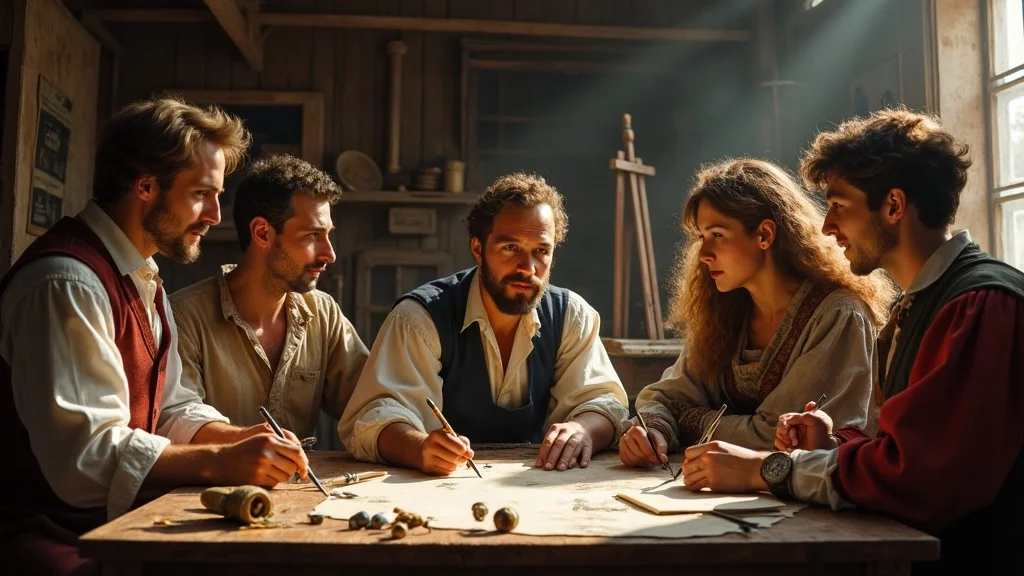
What Is the AI-Driven Renaissance? How It Will Redefine How We Create, Innovate, and Flourish
So what makes this moment a true renaissance—rather than just another tech boom? It’s not only that generative AI and AI models can produce images, music, or stories at scale. The change is deeper: With AI’s expanding reach into writing, problem-solving, and even global health applications, we’re seeing the birth of new mental models, new creative communities, and, yes, new social tensions. This shift isn’t only about acquiring more “tools. ” It’s about redefining the very process of innovation—moving from isolated brilliance to collective inspiration, where AI systems don’t replace human creativity but amplify it. Perhaps most importantly, it’s about tuning our moral and cultural radar—not blindly celebrating every breakthrough, but staying alert to both the risks and possibilities AI invites.
Defining our terms: What makes the current era a true renaissance?
The expanding reach of generative intelligence in art, writing, music, and problem-solving

Why “redefinition” matters—not just new tools, but new modes of thought and community
As organizations and individuals adapt to this new era, the influence of peers and community networks becomes a critical factor in successful AI adoption. For a deeper look at how social dynamics can accelerate—or hinder—AI integration, explore the insights in why peer influence can make or break your AI rollout.
Expert Insights: Pattern Recognition and Emerging Tensions in the Age of AI
"Automation is reshuffling what it means to 'create'; community and meaning come from how we use these tools, not simply what the tech can output." — Dr. R. Chan, technology & culture scholar
Peering into the heart of the AI-driven renaissance, we uncover repeating patterns and tensions. On one hand, automation promises unprecedented productivity—but threatens to erode meaningful human agency. On another, the rise of conversational agents blurs the social lines between individual achievement and collaboration. There is palpable tension between productivity and purpose—between what AI tools can do and what makes human life worth living. As this new age unfolds, the greatest opportunity isn’t just in faster workflows or clever outputs, but in developing new mental models about value and creativity. Thought leaders—even while voicing concerns about epistemic corruption or public policy—agree: To flourish, we must emphasize listening, pattern recognition, and shared stewardship of technological potential.
Recurring tensions: automation vs. human agency, community vs. individual achievement, productivity vs. meaning

How the AI-driven renaissance will redefine how we create, innovate, and flourish through new mental models
Table: Comparing the AI-Driven Renaissance to Past Innovation Waves
Era |
Driving Force |
Impact on Society |
Impact on Creativity |
Lasting Tensions |
|---|---|---|---|---|
Renaissance (1500s) |
Humanism & Print |
Rapid spread of ideas; rise of public discourse |
Explosion in art, science, & philosophy |
Tradition vs. Innovation |
Industrial Revolution |
Mechanization |
Transformed labor market, urbanization |
Mass production, new genres |
Labor vs. Machine; Community vs. Industry |
Digital Age |
Internet & Personal Computing |
Global communication; rise of remote work |
Digital art, online collaboration |
Privacy, Control, Social Media Impact |
AI-Driven Renaissance (Now) |
Generative AI & Machine Learning |
Redefines work, art, health, and daily lives |
Blurring the line between human and machine creativity |
Agency vs. Automation; Purpose vs. Productivity |
Leading with Listening: How Trust, Community, and Moral Reflection Shape AI’s Next Chapter
Moving forward, the most vital leadership posture is one rooted in trust and genuine listening. In the AI-driven renaissance, those who invite diverse voices, encourage moral reflection, and build community resilience foster real transformation—not just technological advances. Trustworthy AI isn’t simply about the right algorithms; it’s about elevating others’ insights, resisting noisy public narratives, and stewarding change well. The courage to listen—rather than to simply broadcast—can drive innovation and connection, opening pathways for all to flourish. As generative AI shapes our daily lives and public policy, the need for thoughtful stewardship outweighs shallow worries or hype.
How a trust-first posture influences the AI-driven renaissance
Why elevating others’ insights—not just broadcasting noise—spurs real flourishing

Morality and meaning in an era of generative technology: resisting shallow concerns in favor of thoughtful stewardship
The False Moral Panics: Separating Signal from Noise in the AI-Driven Renaissance
Within the swirl of headlines and social media debates, it’s easy for the real story to get lost. AI sometimes appears as a villain, invoked in warnings about job loss or existential threats to human rights and global health. Yet most fears—whether about bad actors, mass automation, or uncontrollable AI systems—are more ambiguous than they seem. Much of the dialogue centers on surface-level threats, drowning out crucial questions about our values, rights, and the creative opportunities at hand. By focusing on the tangible, community-centric uses of AI, we can untangle signal from noise and direct our attention to the epistemic corruption and ethical stewardship that actually shape how technology affects human life.
Contextualizing AI fears—from job loss myths to existential doom narratives

Why surface-level concerns can distract from deeper issues and opportunities
Which 3 Jobs Will Not Survive AI?
As the ai-driven renaissance will redefine how we create, innovate, and flourish, it’s unsurprising that some job roles will face significant transformation—especially where tasks are repetitive or easily automated by AI systems and ai tools. Three sectors consistently identified as vulnerable include clerical/data entry positions, routine manufacturing tasks, and certain aspects of customer support. These roles depend heavily on sequence, predictability, and sheer processing power—all areas where generative AI, conversational agents, and machine learning thrive. At the same time, experts note that every major technology wave—whether automation or digitization—has displaced some jobs but opened doors for others. The most resilient workers are those who adapt, collaborating with AI rather than competing against it.
Identifying sectors and roles at greatest risk in the ai-driven renaissance will redefine how we create, innovate, and flourish
Patterns in automation’s historical impact; expert perspectives on adaptation
Expert Commentary: Navigating Displacement with Agency
"Adaptation has always been the hallmark of a resilient labor market. We may lose some roles, but by embracing new skills, workers can find agency in redefining what makes work meaningful." — L. Patel, workforce futurist
Opportunities for reskilling and reimagining work
What Are Bill Gates' Warnings About Artificial Intelligence?
Bill Gates—a leading voice in technology and global health—has repeatedly emphasized that while AI models hold tremendous promise, unchecked development poses risks. His core concerns center on the importance of responsible stewardship: addressing systemic issues like bias, safeguarding against misuse from bad actors, and ensuring AI systems align with human values. Gates cautions against both over-optimism and apocalyptic thinking, warning that public policy gaps, lack of transparency, and insufficient dialogue among stakeholders can magnify challenges. For the ai-driven renaissance to redefine how we create, innovate, and flourish positively, stewardship, accountability, and cross-community trust must come first.
Summary of Bill Gates’ core concerns and his vision for responsible advancement
The ai-driven renaissance will redefine how we create, innovate, and flourish—provided stewardship is prioritized

What Are the Dangers of Artificial Intelligence (AI)?
AI holds real, tangible risks alongside its creative promise. Among the top dangers: bias in data and resulting outputs, loss of privacy, threats to human autonomy, and unintended social or economic consequences. AI systems can perpetuate systemic injustice if left unchecked, amplifying epistemic corruption or blurring the line between fact and fiction—especially in social media. The stakes are particularly high in areas like the power grid, healthcare, and public policy, where the costs of errors or bad actors are greatest. Nevertheless, the ai-driven renaissance will redefine how we create, innovate, and flourish only by meeting these challenges head-on: through careful risk mitigation, investment in trustworthy AI, and ongoing dialogue among technologists, ethicists, and community members alike.
Mapping tangible risks: from bias and privacy to autonomy and unintended consequences
How the ai-driven renaissance will redefine how we create, innovate, and flourish by confronting these dangers proactively
"Responsible AI must anticipate not just how systems will perform as designed, but also what can go wrong when context or actors change. Ethics demands humility and vigilance." — Dr. A. Mensah, AI ethicist
Which 5 Jobs Will Survive AI?
Some roles are not only likely to survive the rise of AI, but to thrive alongside it: in fields where creativity, community, and empathy can’t be automated. The most resilient jobs include (1) creative professionals such as artists and writers, whose work demands originality; (2) educators and mentors, who foster connection and growth; (3) healthcare practitioners focused on human touch and critical judgment; (4) roles in public policy and ethical governance adapting to new technological advances; and (5) community organizers and leaders building trust and belonging at scale. These professions do what AI systems can’t: nurture human consciousness, bridge cultures, and translate insight into new forms of flourishing.
Highlighting jobs that thrive and flourish in the ai-driven renaissance
Community-focused, creative, and people-centric roles as models of resilience
Profile: Inside a Creative Role that Thrives (Mini-Interview or Story)

"AI lets me spend less time on routine tasks and more on exploring big ideas with my team. The tools only amplify what’s uniquely human about our work." — Casey J., digital artist and creative lead
Stories from the Field: Interviews with Creators and Innovators Navigating the AI-Driven Renaissance
Stories matter—because the ai-driven renaissance will redefine how we create, innovate, and flourish by surfacing new narratives and lived experiences. Artists describe AI models as “dream collaborators,” speeding up iteration and freeing up space for risk. Educators highlight hybrid learning—where AI tools supplement but don’t replace human mentorship. Community leaders speak of new forms of trust emerging as people co-design public projects. Through candid interviews, a pattern emerges: resilience is rooted in creativity, open adaptation, and the ongoing weaving of social and cultural rights into technology conversations. Every story, every voice, builds a mosaic of what authentic flourishing looks like amid uncertainty.
Mini-interviews with artists, technologists, and educators
How the ai-driven renaissance will redefine how we create, innovate, and flourish in lived experience

Patterns in resilience, adaptation, and new ways of building community
Video: What Thought Leaders See in the AI-Driven Renaissance
Short embedded video with perspectives from prominent voices on technology, creativity, and human flourishing
Lists: 7 Ways the AI-Driven Renaissance Will Redefine How We Create, Innovate, and Flourish
Expanded creative possibilities: From human-AI collaboration and rapid prototyping to new art forms
New ethical frameworks: Prioritizing risk mitigation and trustworthy AI in every sector
Rediscovered community-based innovation: Building networks that cross disciplines and backgrounds
Increased accessibility: Lowering barriers to creative expression and entrepreneurship for all
Transformation of education: Personalized learning, blended mentorship, and skills for the future
Shifting patterns in leadership: Elevating voices, fostering listening, and reshaping influence
Resilience through adaptable mindsets and strong, networked communities
FAQs: Navigating Uncertainty in the AI-Driven Renaissance
Q: How can leaders and communities approach AI without falling into hype or panic?
A: Use a trust-first, listening-centered posture: Seek nuance, ask questions, and elevate insight, not noise. Rely on pattern recognition and dialogue with credible voices—focusing less on extremes, more on what fosters real growth in human and creative terms.Q: What are practical steps for staying resilient as AI transforms creative work?
A: Invest in lifelong learning, embrace collaboration (with people and AI), and participate actively in shaping community norms. Resilience comes from curiosity, adaptability, and a willingness to keep learning and listening.Q: How do values, faith, or ethics fit into this new era of creation?
A: Values, faith, and ethics are essential—they anchor decision-making and community building. In a time of rapid AI-driven change, explicit attention to these principles ensures technology serves people, not the other way around.
Key Takeaways: The Heart of the AI-Driven Renaissance
The ai-driven renaissance will redefine how we create, innovate, and flourish through trust-first leadership, active community insight, and purposeful stewardship.
Listening, recognizing patterns, and amplifying diverse voices are critical skills for the future.
Resist false moral panics and shallow concerns: Careful stewardship, nuanced dialogue, and action rooted in values matter most.
Video: Deep Dive—Panel Discussion on the AI-Driven Renaissance
Panel-style discussion with leaders from technology, public policy, ethics, and the arts
Multiple perspectives on how the ai-driven renaissance will redefine how we create, innovate, and flourish
Schedule a Conversation and Continue the Dialogue
Ready to explore how the ai-driven renaissance will redefine how we create, innovate, and flourish in your context?
Schedule a 15-minute virtual meeting: https://askchrisdaley.com
If you’re inspired to go beyond the creative and tactical shifts of the AI-driven renaissance, consider how broader social forces and strategic influences shape technology’s impact. The journey doesn’t end with tools or trends—it’s also about the networks and peer dynamics that determine whether innovation truly takes root. For a richer perspective on the pivotal role of community and influence in successful AI transformation, discover the deeper implications in this exploration of peer influence in AI rollouts. By understanding these underlying currents, you’ll be better equipped to lead, adapt, and help your organization flourish in the evolving landscape of artificial intelligence.
In short: The AI-driven renaissance is changing everything—if we lead with trust, listening, and community, we’ll flourish together.




Write A Comment