

Are you truly leveraging the full potential of AI in your organization, or just scratching the surface? If you’ve ever wondered what the most effective AI users know that you don’t, you’re not alone. The future of work is being shaped by those who embrace AI's power—not just as tools, but as transformational levers for growth, innovation, and inclusivity. Unlocking this potential doesn't just benefit tech giants; it can empower every member of your team, especially small businesses aiming to close the gap and thrive in a digital-first world. In this comprehensive guide, you'll discover the strategies and practices that set the best AI users apart—and actionable steps to help all your employees level up, regardless of where you start.
Opening Inquiry: Are You Missing What the Best AI Users Do Differently?
Understanding what the best AI users do differently—and how to level up all of your employees is more than a tech trend—it’s a competitive advantage that is redefining business success across industries. Many organizations invest in AI tools, hoping they’ll bridge skill gaps and automate daily tasks. But simply deploying technology isn't enough. Are you missing hidden opportunities that top-performing teams consistently seize? Real transformation happens when AI becomes woven into your employee experience, work culture, and training paths, enabling team members to develop new skills, streamline processes, and deliver superior customer service. In today's rapidly evolving AI revolution, those who proactively learn, experiment, and adapt can set the pace for everyone else.
Challenging the Status Quo: Why Most Teams Only Scratch the Surface with AI
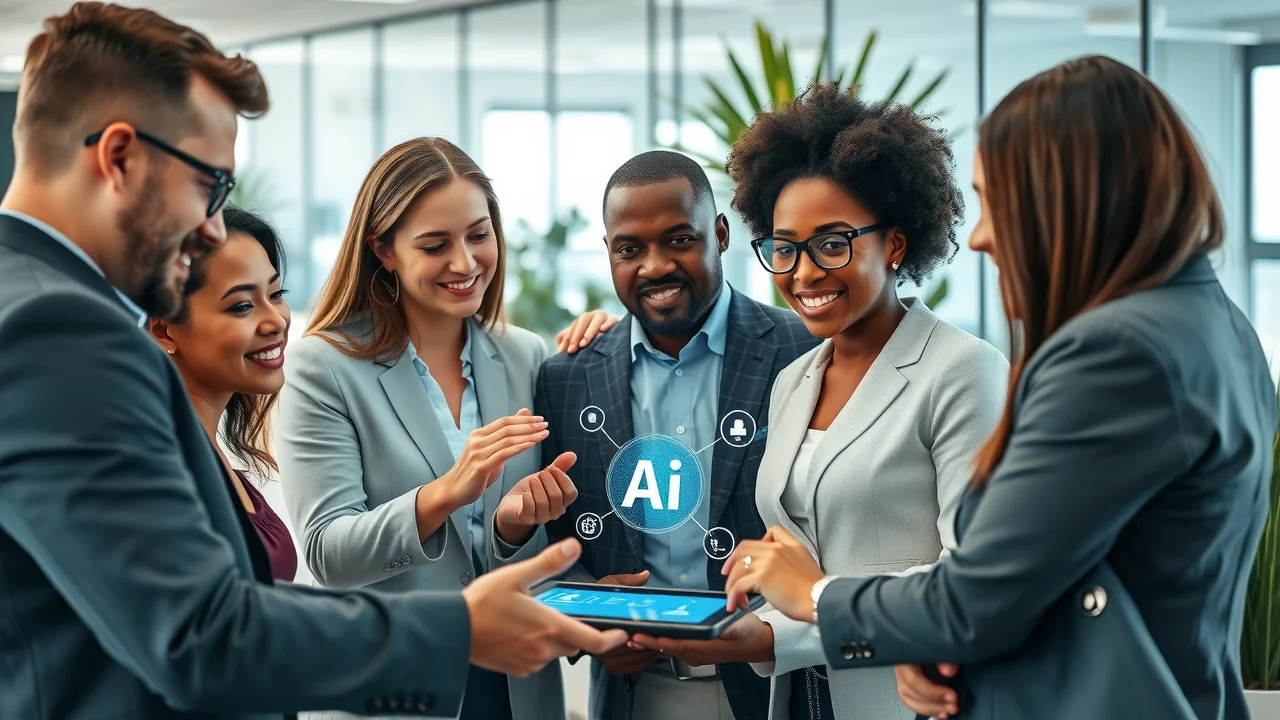
Let’s face it: most companies invest in AI but never move beyond surface-level adoption. The temptation is to rely on out-of-the-box settings, treating AI as a plug-and-play solution for streamlining tasks. But here’s the reality—AI tools can only make a real impact when actively integrated into employee training programs, continuous learning, and knowledge base management. Top AI users know that technology must meet employees where they are, using data-driven insights to personalize experiences and empower teams to close the gap between opportunity and outcome. Without committed leadership and an openness to experiment, many organizations will miss out on the full benefits AI can offer, especially when it comes to nurturing talent and fostering innovation within their teams.
What You'll Learn About What the Best AI Users Do Differently—And How to Level Up All of Your Employees
How top performers harness AI tools
Ways to use AI for employee experience and employee training
The impact of generative AI and knowledge base management
Practical tips to level up all of your employees using AI
Understanding What the Best AI Users Do Differently—And How to Level Up All of Your Employees
Exploring the Employee Experience in the AI Era
In the AI era, the employee experience is profoundly influenced by how organizations integrate smart technology into workflows and culture. Teams that thrive don’t just deploy AI tools—they use them to understand and address skill gaps, streamline communication, and enhance daily tasks. Leading companies offer personalized training modules, utilize predictive analytics, and invest in machine learning platforms that evolve with business needs. For employees, this means more than learning to use a new tool. It’s about embracing a growth mindset, collaborating across roles, and leveraging AI to support career development. Building a dynamic employee experience with AI involves continuous feedback, accessible resources, and leadership that champions upskilling for everyone, not just tech experts.

At the heart of successful AI adoption is a commitment to inclusivity and accessibility. The best AI users ensure team members have equal access to learning opportunities, regardless of their current skill level. They encourage active participation in training programs and design user-friendly AI interfaces to reduce friction. This proactive approach strengthens the employee experience, boosts morale, and sets a foundation for organizational resilience and innovation as technology evolves.
How Generative AI Changes the Landscape of Team Productivity
Generative AI has transformed team productivity from incremental improvement to exponential progress. Unlike traditional automation or basic ai tools, generative AI—powered by advanced language processing and machine learning—creates entirely new content, workflows, and even training modules, tailored to individual and team needs. This capability means employees can generate reports, analyze historical data, or even automate responses in customer service—all in real time. The impact? Employees spend less time on repetitive tasks and more on creative, strategic work, directly improving both productivity and the employee experience.
Moreover, generative AI is closing the skills gap faster than ever before. By embedding personalized learning and contextual support directly into day-to-day applications, companies can quickly upskill employees and prepare them for shifting market demands. This isn’t just about saving time; it’s a fundamental shift in how organizations meet employees’ evolving needs, support ongoing learning, and foster an inclusive, forward-thinking work culture that thrives in the AI revolution.
From Tools to Transformation: What Sets the Best AI Users Apart
Top Ways to Use AI for Business Impact
Automating repetitive workflows
AI-powered knowledge bases for faster problem-solving
AI in customer service: elevating responsiveness and personalization
AI tools for employee training and upskilling

The difference between average and exceptional AI users hinges on intentional adoption and integration. The best teams automate more than just simple, repetitive workflows—they build feedback loops, using predictive analytics to refine processes and personalize support. AI-powered knowledge bases also accelerate problem-solving by providing employees with immediate access to resources and guidance. This transforms onboarding, continuous learning, and even customer service, as responses become faster, more accurate, and tailored in real time. Ultimately, these organizations empower their workforce to innovate, adapt, and deliver exceptional value at every touchpoint.
Case Study: A Small Business Success Story with AI Adoption
"AI isn’t just for tech giants—minority small businesses are using these same tools to punch above their weight."
Consider a minority-owned local retail shop that was initially struggling with inventory management and inconsistent customer service. After implementing a simple AI tool to track inventory and automate customer responses, the business experienced remarkable results: inventory shortages dropped, and customers reported a more seamless shopping experience. Additionally, the business utilized AI-powered training modules to help team members quickly adapt to new technology and processes, closing skills gaps previously thought insurmountable. By leveraging user-friendly AI tools set up for continuous feedback and improvement, this small business not only survived in a tough market but thrived—serving as a powerful example of what happens when the democratization of AI meets entrepreneurial ambition.
Unlocking Employee Potential: How to Level Up All of Your Employees with AI Tools
Employee Training: Building AI Fluency Across Your Team

Effective employee training is the linchpin for unlocking the true value of AI investments. Rather than relying on generic demos, top organizations design training programs that focus on building day-to-day fluency and confidence with AI tools. They incorporate interactive learning platforms, hands-on modules, and mentorship, which enable team members to experiment and solve real-world challenges in a supportive environment. By meeting employees where they are and offering differentiated training paths, businesses can accelerate onboarding, deepen engagement, and enable rapid upskilling.
Taking it a step further, successful teams foster a culture where continuous learning is encouraged and rewarded. They recognize that AI evolves, so training programs must too—embedding regular updates, gamified learning modules, and group coaching to ensure knowledge stays fresh. This long-term investment yields more than just technically skilled employees; it builds a workforce centered on adaptability and empowered to leverage AI for creative and operational gains across the business.
Fostering Continuous Learning with a Knowledge Base and Generative AI
A robust knowledge base powered by generative AI is a secret weapon for ongoing learning. Imagine employees being able to type a question and receive context-aware, accurate responses in seconds, or access training materials that update themselves based on the latest company policies and best practices. This approach breaks down silos, reduces bottlenecks, and keeps the team working from a single source of truth. Top AI users also leverage machine learning to analyze how employees interact with their knowledge base, using insights to streamline search results, flag skill gaps, and guide the development of new training opportunities—all in real time.
Continuous learning isn’t just about keeping up; it’s about anticipating what’s next. By making knowledge and upskilling accessible, engaging, and always available, organizations can prepare for future disruptions and keep their teams ahead of the curve, driving productivity and satisfaction throughout the employee experience.
Coaching Employees to Use AI Tools for Better Employee Experience
Individual and group coaching on AI tool usage multiplies the value of any technological investment. High-performing organizations understand that not every team member learns the same way or at the same pace. Through targeted coaching, employees receive guidance that’s shaped to their unique roles, addressing everything from the basics of navigating dashboards to advanced generative AI workflows. Coaches not only train but inspire—aiding in the adoption of new workflows, troubleshooting, and even innovating novel ways to use AI within their specific job functions.
What sets the best AI users apart is a culture of psychological safety, where employees feel comfortable asking questions, trying new things, and sometimes failing in pursuit of better solutions. This creates a loop of feedback, experimentation, and iterative improvement, embedding AI as a source of empowerment and career development, not apprehension or resistance.
Practical Ways to Use AI: Step-by-Step for Every Role
Tailoring AI Solutions for Sales, Marketing, and Customer Service

AI solutions are not one-size-fits-all. In sales, AI can automate lead scoring, personalize follow-ups, and forecast pipeline trends using predictive analytics. For marketing, it enables real time campaign optimizations, audience segmentation, and content generation—giving teams an edge in both strategy and execution. In customer service, AI chatbots and digital assistants handle common inquiries 24/7, while knowledge bases empower human agents with the right information at the right time, boosting responsiveness and customer satisfaction.
By tailoring AI tools to the unique workflows in each department, organizations unlock efficiencies and creative opportunities. Successful teams regularly revisit their solutions, seeking employee feedback and reviewing data to ensure AI continues to serve—and not hinder—day-to-day operations.
Empowering Creative and Operational Teams with AI-Driven Workflows
Creative and operational teams benefit enormously when AI-driven workflows are integrated into their processes. AI can automate time-consuming administrative work, help brainstorm new ideas with generative content tools, and even curate personalized experiences for both internal and external audiences. Whether it’s managing schedules, producing designs, or analyzing customer feedback, AI removes obstacles so teams can focus on generating value. This not only enhances the employee experience but also helps teams identify emerging trends, deliver better customer service, and maintain a competitive advantage in a rapidly changing market.
Empowered by smart, adaptive tools, employees can pivot quickly to meet new challenges—fueling innovation, improving work culture, and raising the bar for productivity at every level of the organization.
Tables: Comparing What the Best AI Users Do Differently—And How to Level Up All Employees
AI Usage Category |
Standard AI Tool Usage |
Best-in-Class AI Usage |
|---|---|---|
Employee Experience |
Generic onboarding, static FAQs, occasional surveys |
Personalized onboarding, dynamic feedback loops, continuous learning via generative AI |
Employee Training |
One-time training modules, limited skill assessment |
Ongoing, role-specific training, adaptive modules, real-time progress tracking |
Knowledge Base Management |
Keyword search, static articles |
Intelligent search, AI-generated content, real-time updates based on policy changes |
Customer Service |
Basic chatbots, pre-defined responses |
Multi-channel AI assistants, predictive analytics, personalized experiences, human-AI collaboration |
Business Impact |
Automated reports, siloed usage |
Organizational transformation, data-driven decision making, inclusive adoption across teams |
People Also Ask: Expert Answers on What the Best AI Users Do Differently—and How to Level Up Your Team
What is the 30% rule in AI?
Understanding the 30% Rule: Efficiency Benchmarks and Best Practice
The “30% rule” in AI refers to the idea that well-integrated AI tools can lift team efficiency by streamlining up to 30% of manual or repetitive tasks—freeing employees to focus on more complex, value-generating work. While this percentage varies by industry and implementation, it sets a practical benchmark for what teams can achieve with intentional AI adoption. The best AI users move beyond this baseline, using continuous learning and adaptive processes to maximize both productivity and innovation in their organizations.
What is the $900,000 AI job?
Why High-Value Roles Require Mastery of What the Best AI Users Do Differently
The so-called “$900,000 AI job” refers to executive and specialist roles dedicated to AI strategy, implementation, and ethical leadership. These roles command high salaries because they require not just technical skills, but also deep understanding of what the best AI users do differently—blending technology with people-centric approaches. Mastery includes managing team training, data security, generative AI initiatives, and ensuring that AI-driven transformation is inclusive, responsible, and scalable for long-term business impact.
What is the best AI for different tasks?
Matching AI Tools to Team Needs: Generative AI, Employee Training, and Customer Service
The best AI tools depend on the specific needs of your team. Generative AI applications excel at content creation and personalized training. For employee training, adaptive learning platforms guided by machine learning can pinpoint skill gaps and deliver relevant material. In customer service, digital agents powered by natural language processing are ideal for handling inquiries, while AI-driven knowledge bases support internal teams. The key is to evaluate your workflows, identify recurring challenges, and select AI solutions that best enhance those areas, empowering every team member to excel.
How to use AI for upskilling?
Upskilling Strategies: Building Expertise Across All Employees Using AI
To use AI for upskilling, start by assessing current skill levels across your organization. Next, integrate AI-powered learning platforms that tailor training programs to individual needs and update content based on real time performance data. Encourage continuous feedback and peer collaboration to reinforce learning, and establish a clear roadmap for progression. Even small businesses can close skill gaps and increase employee versatility by embedding upskilling as an ongoing process supported by accessible, engaging AI tools.
Key Takeaways from What the Best AI Users Do Differently—And How to Level Up All of Your Employees
Best AI users engage in continuous learning and experimentation
Employee training and knowledge base management maximizes generative AI benefits
AI tools transform employee experience and customer service when used creatively
Small businesses in minority communities can thrive by adopting AI

Frequently Asked Questions: What the Best AI Users Do Differently—And How to Level Up All Employees
How can small businesses in minority communities use AI to compete with larger organizations?
Small businesses in minority communities can level the playing field by adopting affordable and scalable AI tools for daily operations, customer service, and marketing. By automating routine work, delivering personalized experiences, and enabling faster training, these businesses can compete on efficiency and innovation, not just scale. Embracing AI also supports inclusive hiring and development, boosting competitiveness and resilience.
What specific features should I look for in AI tools for employee training?
When selecting AI tools for employee training, prioritize adaptive learning modules, real time progress tracking, integration with your existing knowledge base, user-friendly interfaces, and personalized content delivery. Collaborative features such as peer feedback and coaching are also important for building a supportive learning environment and maximizing team engagement.
How can AI improve the employee experience for remote teams?
For remote teams, AI enhances the employee experience by automating onboarding, streamlining knowledge sharing, and providing continuous feedback through digital assistants and adaptive learning platforms. It bridges communication gaps with real time updates and allows all team members to access resources on demand, increasing employee satisfaction, engagement, and productivity from any location.
Are there easy ways to use AI for team knowledge base management?
Yes—AI simplifies knowledge base management by automatically updating content as company policies evolve, offering intelligent search, and flagging outdated or duplicate information. Many modern AI tools are user-friendly and require little technical expertise, making it simple for teams of all sizes to launch and maintain an up-to-date knowledge base that supports continuous learning.
Final Thoughts: Start Leveling Up With What the Best AI Users Do Differently
Adopting what the best AI users do differently isn’t just a technological upgrade—it’s a cultural shift that empowers every employee to learn, grow, and innovate. Don’t wait to be left behind—embrace AI and transform the future of your organization, starting today.
Schedule a 15 minute let me know further virtual meeting at https://askchrisdaley.com
Sources
To further enhance your understanding of effective AI integration within organizations, consider exploring the following resources: “Collaborating with AI Agents: Field Experiments on Teamwork, Productivity, and Performance” (arxiv. org) This study examines how AI agents influence team dynamics, revealing that human-AI collaboration can significantly boost productivity and communication. “Safety First: Psychological Safety as the Key to AI Transformation” (arxiv. org) This research highlights the importance of fostering a psychologically safe environment to encourage AI adoption and effective usage among employees. By delving into these studies, you’ll gain valuable insights into the strategies that distinguish top AI users and learn practical steps to elevate your team’s capabilities.




Write A Comment