

Provocative Inquiry: Can artificial intelligence truly inspire breakthrough ideas, or is it destined to keep us circling back to what’s already been done? As we invite AI into our creative processes, this question isn’t just timely—it’s urgent for anyone determined to innovate, not imitate. In a landscape where human creativity meets advanced algorithms, discovering how to leverage AI and not accelerate and reinforce ideas that are familiar and stale is essential to moving beyond predictability and unlocking meaningful originality.
A Provocative Inquisition: When Does Artificial Intelligence Dull Human Creativity?
Artificial intelligence (AI) now sits at the heart of how ideas are sourced, shaped, and shared in businesses, art, communication, and design. Its ability to analyze vast amounts of data and identify connections has unlocked what some call “superhuman” insight. Yet, experience tells us that integrating AI can bring about an unintended side effect: instead of amplifying novelty, it risks amplifying the familiar. Consider this: when AI leans too heavily on the patterns it finds in large datasets, it may inadvertently dull the spark of human creativity, simply recombining what it knows rather than forging new paths. This nuanced tension goes beyond mere tool selection—it’s about how we structure our interaction with AI, prompting us to ask whether we are accelerating originality or accidentally reinforcing the very ruts we long to escape.
In my work with creative professionals and technologists, I’ve observed spirited roundtable debates—brimming with both excitement and caution—about AI’s role in idea generation. The strongest voices bring a trust-first, community-savvy approach: they want to amplify, not automate, human intelligence. Their advice lands on one central theme: what distinguishes AI as either “noise” or “signal” in creativity rests not on its adoption alone, but on wise, intentional integration within creative workflows.

Rethinking the Narrative: Is AI Doomed to Rehash Stale Ideas or Spark New Frontiers?
We stand at a crossroads. Does artificial intelligence default to churning out remixes of yesterday’s art, conversations, or product designs? Or does it act as a catalyst—a generative engine capable of expanding what’s possible? This inquiry calls for a pattern-based commentary and careful observation of both strengths and pitfalls. Drawing from dialogue with community leaders, it’s clear that AI is neither hero nor villain; instead, it’s a responsive extension of human direction. It mirrors the biases, habits, and bravery of its operators.
When we prompt AI with stale frameworks, we get familiar results: echo chambers of consensus, design tools repeating what’s popular or proven, and content pipelines that value speed over distinction. Yet, when AI is wielded with deliberate friction—curating unconventional solutions, blending unlikely data sources, and testing against active editorial oversight—it can empower the quest for truly original idea generation. The future of creativity hinges on how we invite and interrogate AI’s influence, not on whether we use it at all.
“Technology can become noise or become signal—the distinction rests in wise integration, not mere adoption.”
What You’ll Learn in This Guide to How to Leverage AI and Not Accelerate and Reinforce Ideas That Are Familiar and Stale
How to recognize when AI is unknowingly recycling established patterns instead of innovating
Steps to integrate AI in ways that provoke, not parrot, human creativity
Strategies from thought leaders on avoiding echo chambers in generative AI experimentation
Practical frameworks, rules, and community insights on idea generation with artificial intelligence
Understanding AI’s Impact: From Human Creativity to Stale Content
The Relationship Between Artificial Intelligence and Human Creativity
At its best, artificial intelligence acts as a collaborator—a partner in invention for human creativity. By sifting through vast datasets, AI tools can identify outliers, trends, and seeds of new ideas faster than human intuition alone. Many generative ai applications spark fresh inspiration by suggesting connections we might overlook, from stunning image remixes to novel written phrases via language processing. The true advantage comes when AI augments, not replaces, the human element—a synergy where the machine’s ability to analyze large amounts of data and perform repetitive tasks frees people to dig deeper, ask bigger questions, and frame bold new challenges.
However, this relationship requires conscious stewardship. Relying too heavily on AI’s “comfort zone”—the average or the already-known—can trap creators in cycles of subtle imitation. We see this in music that sounds eerily familiar, essays repeating viral opinions, or even design tools defaulting to proven but predictable templates. Recognizing when AI amplifies versus dulls human creativity is a critical first step in designing for authentic originality.
For those interested in practical frameworks that help maintain a competitive edge as AI becomes more integrated into creative and professional environments, exploring how to redefine expertise and stay relevant amid AI adoption can offer actionable strategies that complement the approaches discussed here.
Patterns of Familiarity in Idea Generation
Idea generation is a process that can benefit tremendously from the scale and speed of modern AI technologies. Machine learning and generative design tools, for instance, enable creative teams to produce large volumes of prototypes and test a range of solutions. Yet, the risk lingers: left unchecked, these systems often reinforce patterns rooted in their training data—which consists largely of what’s already popular, accepted, or widely published.
If AI is trained primarily on canonical examples, it becomes expert at predicting conventional next steps. For those seeking innovation, it’s vital to spot when tools are “playing it safe,” falling back on familiar clusters instead of forging new connections. Practitioners must learn to spot—and disrupt—the cycle of familiarity, whether in copywriting, visual arts, or product ideation, to keep genuine ingenuity alive.
Why Integrating AI Can Unintentionally Strengthen Predictable Thinking
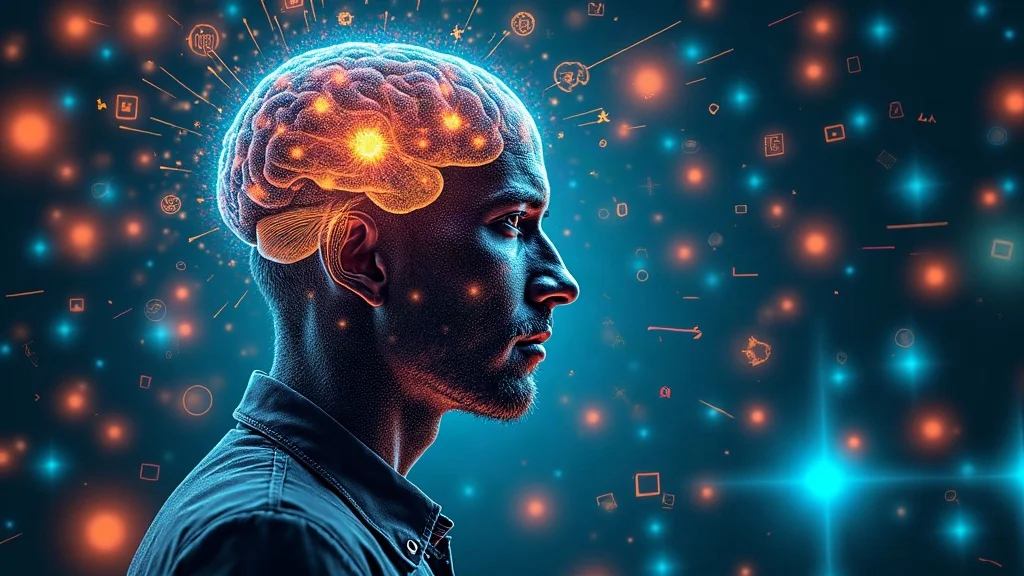
Many integrating AI efforts unintentionally default to reinforcing the safest answers. This isn’t a flaw in the technology, but a result of its design and training. AI excels at pattern recognition—it’s literally optimized to surface commonality from large amounts of data. Learning algorithms do not inherently know how to take risks or break from precedent. When constrained to data reflecting only yesterday’s solutions, the risk is that these tools become amplifiers of what worked before—offering great support for refining processes, but falling short of driving paradigm shifts or disruptive change.
To counteract this, creative leaders are adopting frameworks and rules—like the ‘human in the loop’ approach—ensuring that generative AI suggestions are always accompanied by robust editorial review and regular originality audits. In doing so, organizations move beyond simply automating the familiar and instead use AI to enhance and provoke intentionally unfamiliar thinking.
Historical Context: How Innovation Became Imitation
Lessons from Generative AI: Data, Models, and the Risk of Redundant Outputs
Generative AI, for all its power, reflects the limitations of its training. Models built on enormous yet backward-looking datasets—harvested from the internet, books, or company archives—are brilliant at creating variations of what’s come before. This is why prompts relying heavily on “the way it’s been done” will reliably output familiar results. Drawing insight from expert interviews, I’m reminded of a simple but profound notion: AI isn’t magic; it’s mathematics; the more it’s trained on yesterday, the less often it invents tomorrow. For organizations motivated by breakthrough idea generation, the imperative is clear—don’t just ask AI for more of the same, but intervene to urge it toward the unpredictable.
Communities experimenting with AI in creative fields often report recurring frustrations: recycled tropes in narrative content, lookalike artwork from generative design tools, and an overall drift toward safe, well-tread solutions. These stories echo across industries—reminding us that while automation can drive productivity, it can also “flatten” innovation when not intentionally disrupted.
“AI isn’t magic; it’s mathematics. The more it’s trained on yesterday, the less often it invents tomorrow.” – Expert Commentator
Community Voices: Where Do We See AI Encouraging or Discouraging Originality?
Much of AI’s creative promise is being shaped—and challenged—at the community level. In design studios, music collaboratives, product teams, and open-source forums, innovators routinely test how machine learning models can surprise, delight, or disappoint. Many celebrate AI’s ability to analyze and distill vast datasets, cultivating fresh perspectives through remix and juxtaposition. Yet, others note the persistent tension: when collaboration lacks critical dissent, or when curation is passive, AI can amplify mainstream, low-risk thinking.
What stands out in these stories is not the technology itself, but the culture cultivated around it—one that prioritizes ongoing audit and healthy friction. By actively soliciting feedback, reframing prompts, and inviting multi-disciplinary review, organizations can tip the balance from imitation to invention. There is a consensus: originality arrives where human intelligence meets intelligent integration—not mere automation.

Strategic Integration: How to Leverage AI and Not Accelerate and Reinforce Ideas That Are Familiar and Stale
The '30% Rule' in AI: What Is It?
Explanation: The 30% rule in AI advocates for limiting reliance on fully automated, AI-generated outputs to just a third of a creative workflow or project. This ensures ample room for human oversight, inspiration, and curation—inviting human creativity to challenge and remix what the machine produces.
How this framework can keep idea generation fresh: By consciously constraining automation, teams are prompted to intervene whenever creativity risks becoming formulaic. The framework empowers leaders to blend AI efficiency with the unpredictability and intuition of the human mind, breaking up monotony and pushing for distinction in idea generation.
The 10/20-70 Rule for AI: Navigating Novelty Versus Efficiency
Clarifying the rule and its purpose: The 10/20-70 rule suggests teams split their approach into three parts: 10% for breakthrough innovation, 20% for targeted experimentation, and 70% for proven, reliable methods. Within AI-driven creative processes, this guards against over-indexing on efficiency—ensuring that space always remains for calculated risk and deliberate exploration.
Applying it to your AI-driven creative process: Reserve a portion of your workflow for ambitious prompts and cross-disciplinary collaboration, push beyond what’s familiar with AI-powered experimentation, and strengthen foundations with practices that have a track record of success. This structured distribution keeps organizations future-facing while delivering consistent value.

Techniques for Avoiding the Trap of Reinforcing Stale Ideas
Blend AI outputs with human editorial judgment: Ensure humans remain present to review and adjust, filtering for originality and relevance.
Use prompts that force unfamiliar connections: Challenge the model with novel, even odd, combinations of topics or styles to force generative ai beyond its comfort zone.
Audit your outputs for originality regularly: Set up processes where teams or external reviewers check for pattern repetition, ensuring your ideas are not simply echoes of existing content.
Community and Expert Perspectives: Pattern Recognition Beyond the Algorithm
Mini-Interviews: How Leaders Harness AI for Authentic Innovation
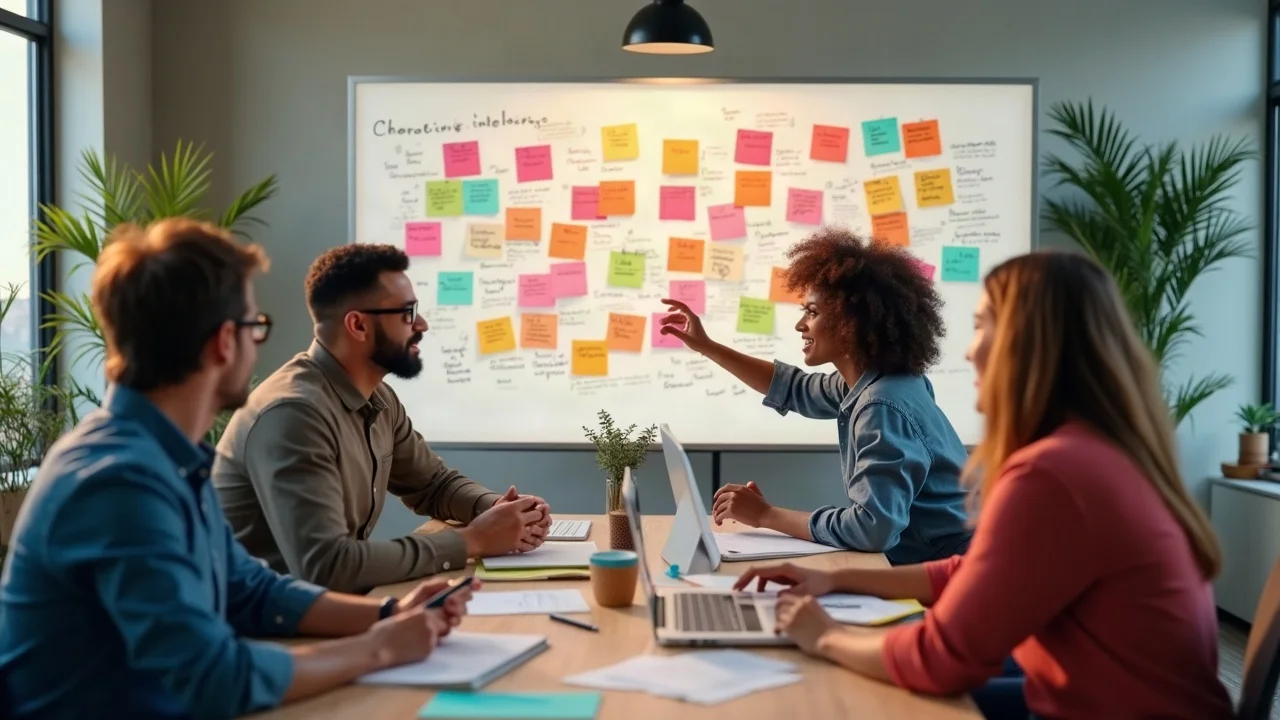
In recent dialogues with creative leads, designers, and technologists, a strong narrative emerges: creativity thrives in friction—and the right friction can be engineered with AI, if you choose wisely. Experts describe how pairing diverse teams with sophisticated AI tools generate the tensions needed for authentic breakthroughs. It’s not about replacing human insight, but leveraging AI to understand why certain ideas repeat, and then constructing new frameworks that challenge those repetitions. Ultimately, it requires leadership that values both efficiency and constraint, encouraging people to remain hands-on and critically engaged with AI technologies.
“Creativity thrives in friction—and the right friction can be engineered with AI, if you choose wisely.” – Innovation Strategist
Pattern-Based Commentary: Recurrent Tensions in Integrating AI with Human Creativity
The ongoing conversation in the AI space is not about whether technology will overtake human creativity, but how to manage recurring tensions: speed versus reflection, automation versus curation, scale versus distinctiveness. AI can enhance fast idea generation but must be counterbalanced by human pattern recognition and in-depth review. Successful teams leverage this duality, feeding learning algorithms with unconventional datasets and deploying design tools that intentionally subvert established norms. The result? Cumulative innovation that respects both the wisdom of experience and the unpredictability of genuine creativity.
As one community leader remarked, “The best use of AI is not to copy brilliance, but to catalyze it. ” By recognizing and disrupting the patterns AI tends to repeat, organizations can avoid the trap of sameness, championing a future where technology continually refreshes—not flattens—their creative edge.
Leveraging Generative AI for Sustainable Idea Generation
Generative AI Approaches that Encourage New Thinking
To ignite new thinking, the most innovative teams construct workflows where generative ai is an invitation, not a prescription. They use design tools and machine learning platforms to prototype, remix, and iterate, but make room for gut checks and unexpected pivots by human editors, strategists, or outside collaborators. These workflows reject the notion that automation should dominate, instead opting for intentional moments of pause, review, and re-direction.
Case studies show that when generative design tools are guided to cross discipline boundaries—think AI-powered writing paired with hand-drawn sketches or programming teams facilitating design sprints—truly original, unconventional solutions emerge. In these collaborations, AI is used to sift through vast amounts of data, frame the possible, and inspire, while humans intervene where vision and intuition are most needed.
Collaborative Workflows: How Human Creativity and Artificial Intelligence Empower Each Other
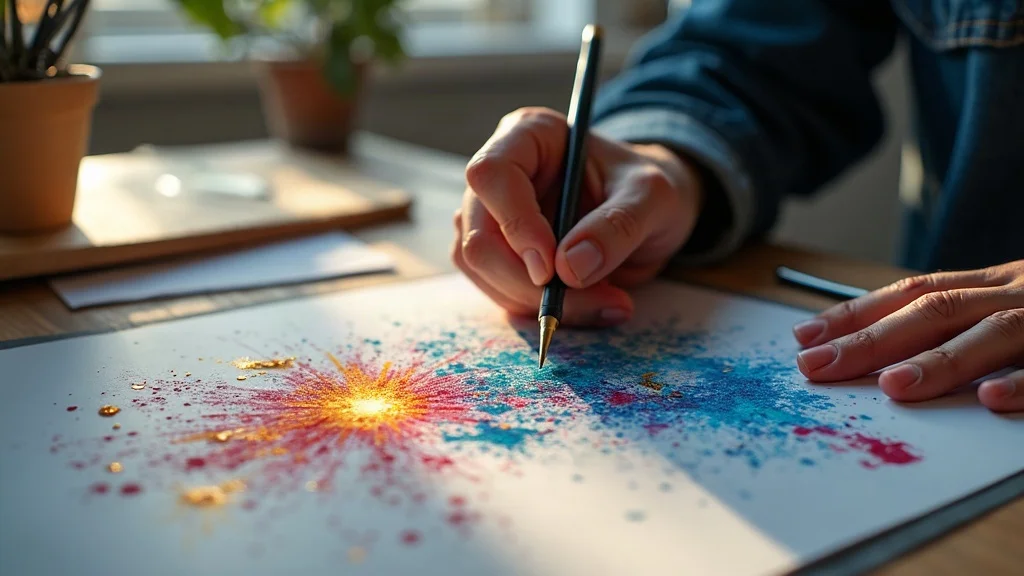
The most forward-thinking creators see the relationship between people and AI as dynamic and dialogic. Hybrid collaboration—where editorial control, peer review, and multi-disciplinary workshops are baked into the development cycle—pulls the best from both worlds. Successful creators acknowledge that “the best use of AI is not to copy brilliance, but to catalyze it. ” The endgame is not hands-off automation, but spirited, creative friction that unlocks new insights and solutions.
“The best use of AI is not to copy brilliance, but to catalyze it.” – Community Leader
Key Strategies and Practical Lists: How to Leverage AI and Not Accelerate and Reinforce Ideas That Are Familiar and Stale
Challenge model defaults: Start with the unexpected
Integrate diverse data sets to disrupt predictability
Incorporate feedback loops: Invite multi-disciplinary review
Maintain a ‘human in the loop’ approach
In-Depth Table: Comparing Approaches—AI Tracks for Fresh vs. Familiar Ideas
Approach |
Risk |
Impact |
|---|---|---|
Prompt Engineering |
Too little variation keeps outputs stale |
Can shift outputs from familiar to novel if prompts are disruptive |
Human Curation |
Passive curation reverts to known ideas |
Editorial oversight sparks original combinations |
Hybrid Collaboration |
Collaboration without dissent breeds familiarity |
Teams spot and amplify unoriginal patterns |
People Also Ask on How to Leverage AI and Not Reinforce Ideas That Are Familiar and Stale
What is the 30% rule in AI?
The 30% rule suggests that only a certain percentage of a project or workflow should rely on AI-generated outputs, ensuring significant human oversight and creative curation to break from what’s familiar.
What is the 10/20-70 rule for AI?
This rule distributes tasks: 10% breakthrough innovation, 20% deliberate experimentation, 70% proven methods—encouraging teams to use AI not only for efficiency but also for boundary-pushing creativity.
How to leverage AI to be more productive?
Use AI to handle repetitive or analytical work, freeing human effort for strategic thinking, creative synthesis, and work that benefits from lived experience and intuition.
What are the 5 big ideas in AI?
The most commonly discussed pillars: Perception, Reasoning, Learning, Natural Language, and Autonomous Systems—each a lens through which to consider how AI might drive new thinking.
FAQs: Navigating the Fear of Stale AI
Can AI ever truly be original? While AI can recombine ideas in complex ways, true originality often arises from context, contradiction, and lived experience—which remains uniquely human. The best results come from blending both machine and human insight.
How to check if your AI workflow is just repeating itself? Regular originality audits, cross-team feedback, and third-party reviews can help catch patterned repetition and encourage breakthrough ideas.
Best resources for unconventional AI prompting? Look to open-source communities, creative coding forums, and multidisciplinary workshops where practitioners routinely share and test innovative prompt frameworks.
How do you know when to intervene as a human? When outputs feel overly familiar, or when new projects start resembling old ones too closely, it’s time to shift the prompt, expand your dataset, or invite new collaborators to disrupt the cycle.
Key Insights on How to Leverage AI and Not Accelerate and Reinforce Ideas That Are Familiar and Stale
Intentional design trumps automation for breakthrough results
Rule frameworks help maintain a balance between efficiency and originality
AI is a tool best paired with diverse, critical, and creative human input
Final Insights: Elevate Your Approach to Human Creativity and Artificial Intelligence
Connect with credible thinkers and communities. Embrace AI’s potential as a launchpad, not a crutch. Choose innovation—deliberately, and often.
If you’re ready to take your understanding of AI’s creative potential even further, consider how redefining your own expertise can help you thrive as technology evolves. By learning how to stay relevant amid rapid AI adoption, you’ll not only safeguard your unique value but also position yourself to lead in a world where adaptability and forward-thinking are essential. Discover more about building future-proof skills and mindsets in this guide to staying relevant as AI transforms industries. Let your next step be one that empowers both your creativity and your career trajectory.



Write A Comment