

Imagine a high school student watching classmates flock to code bootcamps, yet feeling the tug of a welding torch, not a laptop. As artificial intelligence reshapes the workforce and news headlines swirl about automation, what does the future really look like for those considering trade work? This article unpacks the complicated—but hopeful—reality of trade school consideration in the age of AI, spotlighting practical questions, lived experiences, and the enduring heartbeat of the skilled trades.
Why Trade School Consideration in the Age of AI Matters Now
Consider this: A high school graduate watches friends dive into computer science while they’re drawn to welding, anxious about AI’s future impact. What should they weigh in their decision?
The world of work is rapidly evolving. Artificial intelligence is no longer some far-off concept—it's already influencing how we learn, work, and connect. For young people, families, and advisors, the decision of whether to pursue a skilled trade, a college degree, or a tech-centric pathway feels more complex than ever. Many Gen Zers, wary of student loan debt and uncertain job markets, are revisiting the value of practical, hands-on roles. Yet, questions about job security, wage growth, and long-term relevance persist as AI continues to advance.
Trade school consideration in the age of AI isn’t about nostalgia or stubborn resistance to progress. It’s about understanding which skills are automation-resistant, how technical education adapts, and why communities still need electricians, HVAC techs, welders, and other trades workers. As you read on, you’ll gain a nuanced, up-to-date perspective on why trade careers might just be the sleeping giants of the AI era—and why balance, not either-or thinking, is more vital than ever before.
Shifting Landscape: The Evolving Role of Skilled Trades in the Age of AI
The skilled trades are experiencing significant transformation as AI and automation technologies become more pervasive. While some routine tasks within trade work can now be automated, a vast majority of responsibilities—requiring dexterity, judgment, and on-site creativity—are not easily replaced. This evolving landscape demands that skilled trades workers and those considering these fields approach their careers with adaptability and openness to continuous learning. It's not just about resisting automation; it's about working alongside it and leveraging new tools to stay relevant and secure in a changing job market.
Many trades, from electrical to plumbing to HVAC tech, are integrating new technologies even as their core tasks remain deeply physical and human-centered. Career experts and research organizations highlight that while the growth of AI brings understandable anxieties, it also opens up opportunities for technical education programs to evolve, making trade school consideration in the age of AI more significant than ever. The ability to bridge traditional hands-on skills with digital literacy and problem-solving becomes a crucial asset for both new and veteran skilled trades workers.
For those interested in how artificial intelligence is actively shaping the skilled trades, you may find it helpful to explore additional perspectives and news on the intersection of AI and technical education at askchrisdaleynews, which covers recent developments and practical impacts on the workforce.
What You'll Learn in This Article
How trade school consideration in the age of AI is changing career paths
Which skilled trade roles are most and least likely to be automated
Expert insights on technical education and artificial intelligence
Perspectives from educators, students, and workforce strategists
What practical planning looks like for students and families
Understanding Trade School Consideration in the Age of AI
Defining Trade School and Skilled Trades
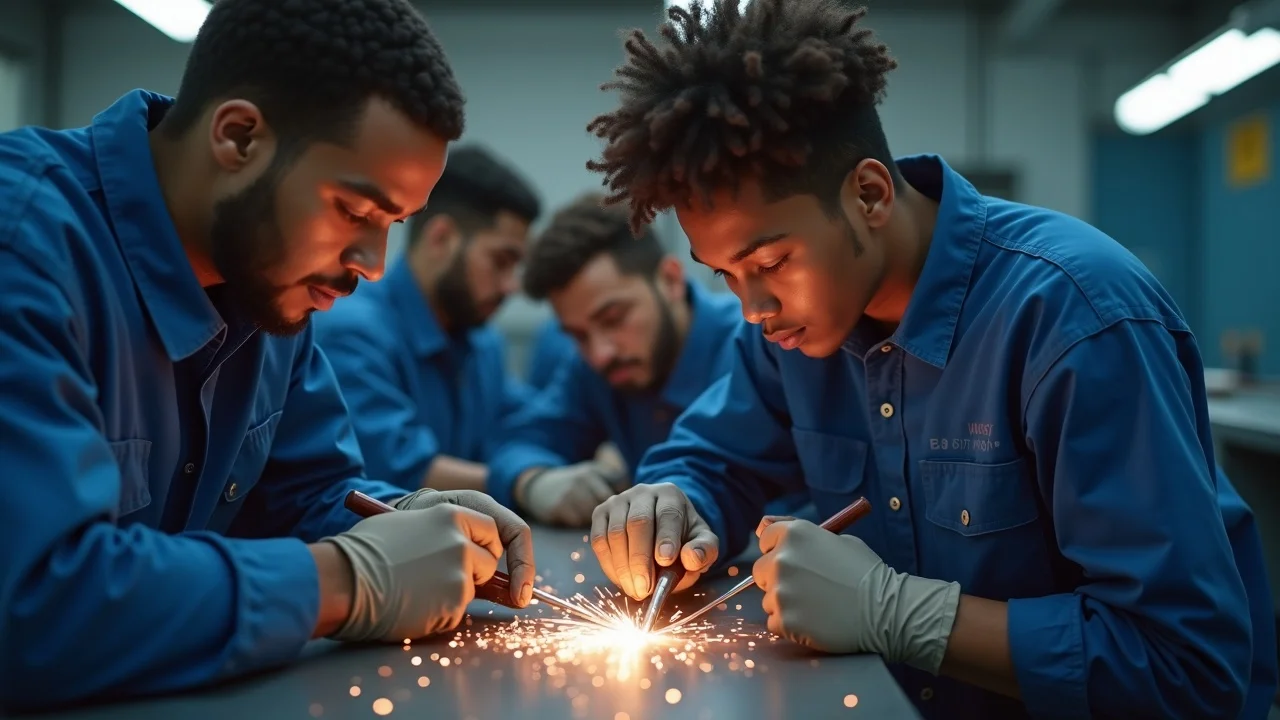
Trade school refers to postsecondary institutions focused on practical, hands-on education designed to launch students directly into skilled trades like construction, electrical work, HVAC, welding, and more. Unlike traditional academic pathways, technical education here is rooted in applied learning—students spend less time memorizing theory and more time developing real-world, “shop floor” aptitudes. Skilled trades go well beyond manual labor; they demand technical expertise, logical reasoning, and sometimes a fair share of creativity.
These career and technical roles offer compelling alternatives for those seeking job security without incurring heavy student loan debt. Recent trends show Gen Z workers increasingly investigating trade school paths, drawn by shorter program lengths, direct workforce entry, and a sense of resilience against automation, especially as AI reshapes the labor market.
What Is Career and Technical Education?
Career and technical education (CTE) is an umbrella term that encompasses a wide array of curriculum and certification programs tailored for work in both skilled trades and emerging technical fields. CTE programs exist in high schools, community colleges, trade schools, and through apprenticeships. These offerings focus on “learning by doing,” combining academic knowledge with practical application. Students in CTE often graduate with industry-recognized credentials, resume templates, and a clear path to employment or apprenticeship.
Crucially, modern CTE also incorporates digital skills—an essential element as artificial intelligence becomes more prevalent in the workplace. Schools are increasingly designing coursework around adaptable learning, incorporating technology-driven tools for everything from troubleshooting HVAC systems to configuring advanced robotics. This evolution challenges the outdated perception that skilled trades are low-tech or inflexible in the face of rapid change.

Overview: How Artificial Intelligence Affects the Skilled Trades
Artificial intelligence is both a disruptor and an amplifier in skilled trades. On the one hand, automation technologies are streamlining repetitive or hazardous tasks—think robotic welders, automated diagnostics, or AI-driven scheduling for job sites. On the other, most skilled trades require human judgment, spatial ability, and improvisation that outstrip current artificial intelligence capabilities. Workforce strategists and research organizations agree: the majority of trades work, from plumbing repairs to tailored installations, will require a “human touch” for the foreseeable future.
The real challenge? Preparing students not only to do the work, but also to interface with changing technologies as part of their daily routine. That’s why trade school consideration in the age of AI involves evaluating which fields are most resilient, how CTE programs integrate ed tech, and what continuous upskilling looks like in this new environment.
Historical Perspective: The Value of Skilled Trades and Technical Education
"Technical education has always adapted. AI is simply the latest chapter." – Veteran trade school instructor
From Industrial Revolution to AI: Change and Continuity in Skilled Trades
The skilled trades have a legacy that dates back to the earliest days of industrial progress. From the rise of mechanized factories in the 1800s, through the arrival of microchips and, now, the onset of artificial intelligence, technical education has repeatedly adjusted in response to transforming industries. Unlike other fields where waves of automation erased whole classes of jobs, skilled trades have shown remarkable continuity. Today’s apprenticeship programs echo the same foundational principles—but with new coursework in programmable logic controls, digital blueprints, and smart tool usage.
The trade workforce’s adaptability speaks to the value of technical education across generations. As one educator put it, “Change is the only constant in trade work—but the need for people who can build, repair, and maintain our infrastructure has never disappeared. ” This perspective isn’t just nostalgic; it’s grounded in steady labor market data underscoring the resilience and necessity of these skills, no matter what technology brings.
The Enduring Need for Career and Technical Skills
Communities depend on skilled trades workers to power daily life—electricians ensuring safe wiring, HVAC techs keeping vital systems running, and welders maintaining the bones of bridges and buildings. As AI continues to evolve, these roles become even more crucial, especially when complex, unstructured, or high-stakes scenarios arise. In this sense, technical education is not just about earning potential; it’s about social security, community resilience, and irreplaceable practical wisdom.
For Gen Z workers and families, this knowledge can help shift the frame away from fear over automation, toward a sense of agency about shaping the future. Today’s skilled trade graduates may be using AI-powered diagnostic tools, but their foundational training remains grounded in a tradition of hands-on problem-solving and lifelong adaptability.
Community Impact: Why Skilled Trades Hold Value Beyond the Paycheck
The impact of skilled trades extends far beyond individual job security or short-term earnings. Trades workers are vital for public safety, local resilience, and even social cohesion—often stepping up for emergency repairs, infrastructure builds, or complex project rescues. As research organizations underscore, trade work offers a sense of meaning and community integration rarely matched by strictly digital fields. For young people seeking not only a career option but a way to make a tangible difference, technical education often becomes a calling, not just a fallback.
When weighing trade school consideration in the age of AI, it’s essential to look at the whole picture: the opportunity for career advancement, the role of skilled trades workers in disaster preparedness, and the ways technical education supports local economies. These dimensions aren’t always reflected in headlines about automation, but they matter deeply in the real-world context.
Artificial Intelligence: Threat or Opportunity for Trade School Graduates?
What Artificial Intelligence Can and Can’t Do in Skilled Trades
Artificial intelligence can process vast data sets, automate repetitive diagnostics, and even guide networked robots in highly controlled settings. However, the work of a skilled trade professional often involves on-the-spot judgment, improvisation, and customer interaction—all attributes current AI struggles to replicate. As one HVAC tech told the outlet: “No algorithm can crawl through an attic, spot a water leak, and win customer trust in ten reflexive minutes. ”
The boundary between what can and can’t be automated continues to shift. But as of now, trades jobs remain among the most “AI-resistant” career options, with most tasks falling below the 30% automation threshold according to recent research. This doesn’t mean students can skip digital skills—in fact, building a digital-meets-manual toolkit is increasingly important. But the core of trade work remains hands-on and deeply human.
Hands-On Skills vs. Automation: A Balanced Perspective
A key concern for students and families is whether investment in technical education still offers long-term job security. The answer, according to workforce strategists and industry leaders, is a measured yes. While automation can reduce the number of routine jobs, it typically creates increased demand for skilled trades workers who can manage, maintain, and troubleshoot smart systems. The result is not the erasure of roles, but their evolution—requiring ongoing learning and adaptability.
This evolving labor market means the best-prepared technical education graduates are those who embrace technology, rather than avoid it. Programs integrating AI-driven toolkits, digital blueprints, and hybrid skills training are positioning their students not only to survive but to thrive amid rapid change. Skilled trades do not stand in opposition to technology—in the age of AI, synergy is the new standard.
Voices from the Field: Trade Workers on AI Disruption
To capture the reality on the ground, I spoke with several trades workers and educators. Their perspective? “AI is a tool, not the boss. ” One journeyman electrician, now mentoring young apprentices, told the outlet: “We've always dealt with new tech—first it was digital meters, then energy management systems. Our work evolves, but skilled trades aren’t going away. ”
Workforce strategist Amelia Grant offered a broader view: “The most resilient trade school graduates are those ready to upskill and adapt—AI need not be a barrier. ” Student stories echo this insight, emphasizing confidence in job security, provided they keep learning and stay plugged into industry trends. These voices highlight the ongoing relevance of technical education and the importance of community in navigating uncertainty.
Trade School Consideration in the Age of AI: Decision-Making for Students and Families
Key Questions to Ask When Weighing Technical Education
Deciding whether to pursue a skilled trade in today’s climate means asking smart, future-focused questions. What is the likelihood that your chosen trade will be affected by AI or automation? How does your target school integrate new technology and digital literacy? Is there a clear path from apprenticeship to career advancement, and are graduates finding jobs after completion? Consultation with CTE counselors, industry mentors, and recent graduates can provide valuable insights and help clarify how trade school aligns with both current opportunities and long-term ambitions.
It’s also wise to evaluate program reputation, alumni networks, and “upskilling” options. Many leading trade schools today bundle technical education with troubleshooting for digital systems, AI-driven diagnostics, and even soft skills like client communication—ensuring their students are both job-ready and future-proof.
Strategies for Lifelong Adaptability in Skilled Trades
Investigate which trades are ‘AI-resistant’
Seek out trade schools that emphasize upskilling and tech literacy
Consult career and technical advisors for emerging industry trends
Embrace continuous learning—in and beyond technical education
Each of these strategies positions students and families to make informed decisions—and to navigate the rapid pace of change that defines skilled trades today. Whether it’s through formal certification, on-the-job learning, or industry workshops, those who keep growing find themselves best prepared for a world where AI is always on the horizon, but rarely at the center of the hands-on trades.

Mini-Profile: A Student’s Trade School Consideration in the Age of AI
Meet Maya, a recent high school graduate. While some peers chase four-year degrees, Maya is drawn to the practical impact—and community respect—of skilled trades, considering an HVAC tech track at her local technical education center. Her biggest concern? The noise around AI disruption. After job-shadowing, she discovers that most seasoned workers see AI as a tool for diagnostics, not a replacement for hands-on repairs or problem-solving. With guidance from her career and tech advisor and some research into the “AI-resistance” of her chosen path, Maya decides to enroll. She joins a cohort of Gen Z workers who understand that future job security comes from a blend of manual skills, tech savvy, and an open mindset.
Comparing Technical Education Pathways: College, Trade School, and Apprenticeships
Technical Education Pathways & AI Impact |
||||
Pathway |
AI Impact Risk |
Skills Emphasis |
Typical Program Length |
Post-Graduation Paths |
|---|---|---|---|---|
Community College |
Moderate |
Analytical, some technical |
2 years |
Varied |
Trade School |
Low to Moderate |
Hands-on, technical |
6 months – 2 years |
Direct to workforce |
Apprenticeship |
Low |
Work-based, evolving with tech |
2–5 years |
Direct to skilled trades |
Watch: Dynamic explainer animation (not included here) illustrating the overlap and differences between college, trade school, and apprenticeship paths—highlighting how each interplays with AI trends.
People Also Ask: Navigating Trade School Consideration in the Age of AI
Will trade jobs be taken over by AI?
Answer: While some tasks may be automated, most skilled trades involve dexterity, judgment, and on-site adaptability that current artificial intelligence cannot match. Many trade roles will evolve—not vanish.
What is the 30% rule in AI?
Answer: The 30% rule generally refers to jobs or tasks with at least 30% of activities potentially impacted by AI automation. Most skilled trades remain below this threshold according to recent workforce research.
What trade makes $100,000 a year?
Answer: Some skilled trades, such as elevator mechanics, electrical line installers, and certain technical education specializations, offer high earning potential—especially with experience and certification.
What should students study in the age of AI?
Answer: Encouraged studies include hands-on skilled trade programs, technical education, digital literacy, and interdisciplinary problem-solving. Lifelong learning is crucial for adaptation.
Expert Insights: Navigating Career and Technical Education in a Tech-Driven World
"The most resilient trade school graduates are those ready to upskill and adapt—AI need not be a barrier." – Workforce strategist
Case Study: Successful Technical Education Responses to Artificial Intelligence
Across the country, some technical education centers are leading the way in preparing students for the evolving job market. For example, the Midwestern Technical Institute revamped its HVAC tech program to include modules on AI-driven diagnostics and IoT-enabled systems. According to program directors, graduates report not only greater confidence in job security, but also higher rates of career advancement and satisfaction. By building “digital augmentation” into technical education coursework, these programs empower trades workers to embrace, rather than fear, technological change.
Similarly, apprenticeship programs are partnering with research organizations and community colleges to design hands-on labs where “smart” tools coexist with traditional trade work. This approach not only future-proofs job candidates but also helps communities maintain strong pools of skilled trades workers ready for the demands of modern infrastructure.
Profile: Apprenticeship Directors on Preparing for the Future
Jalen Lee, director of a union-affiliated electrical apprenticeship, highlights a crucial pattern: “Every new technology—from programmable controllers to cloud-based blueprints—has at first been met with skepticism. But the folks who lean in, asking how it improves safety or quality, end up leading the team. AI is just the next phase in that tradition. ” Insights from apprenticeship directors suggest career and technical education must continually blend foundational skills with up-to-date ed tech, encouraging curiosity, mentoring, and cross-generational dialogue.
As Lee observes, “Automation may change the details, but the trades’ core mission remains steady: keeping our world working, safe, and sustainable. ” These profiles reinforce one truth—trade school consideration in the age of AI is ultimately about building careers that serve real people, solve concrete problems, and adapt with integrity over time.
Key Takeaways for Trade School Consideration in the Age of AI
Skilled trades remain vital even as artificial intelligence grows
Trade school consideration in the age of AI requires new questions about adaptability
Technical education can be a launch pad for both immediate work and long-term growth
Community conversations matter—listen, learn, and share insights
FAQs on Trade School Consideration in the Age of AI
Which skilled trades are most AI-proof?
Are there technical education programs already integrating artificial intelligence skills?
How do career and tech students prepare for future automation?
Does a skilled trades background still offer job security in the age of AI?
Your Next Step: Connect About Trade School Consideration in the Age of AI
Schedule a 15 minute let me know further virtual meeting at https://askchrisdaley.com
Conclusion: Reframing Trade School Consideration for an AI-Driven Future
The Ongoing Conversation: Why Community Voices and Real-World Context Matter
Trade school consideration in the age of AI is best navigated through curiosity, adaptation, and dialogue—a collaborative journey that keeps skilled trades thriving, relevant, and essential for decades to come.
As you reflect on the evolving landscape of skilled trades and technical education, remember that staying informed is key to making empowered decisions. If you’re eager to dive deeper into the latest trends, expert commentary, and actionable strategies for navigating AI’s impact on the workforce, consider exploring the broader coverage available at askchrisdaleynews. There, you’ll find a wealth of insights designed to help students, families, and professionals anticipate change and seize new opportunities. Whether you’re charting your own path or advising others, expanding your knowledge base is the next step toward building a resilient, future-ready career in the age of AI.
Sources
In the evolving landscape of education and employment, understanding the role of trade schools in the age of artificial intelligence (AI) is crucial. The article “Training in the Age of AI: A Theory of Apprenticeship Viability” by Luis Garicano and Luis Rayo explores how AI impacts apprenticeships, emphasizing the importance of adaptability in training programs. (kellogg. northwestern. edu) Additionally, the National Education Association’s piece, “Teaching in the Age of AI,” discusses the integration of AI in educational settings and the necessity for educators to guide its use effectively. (nea. org) For those considering trade schools, these resources provide valuable insights into how AI is reshaping vocational education and the strategies needed to thrive in this new era.




Write A Comment