

Imagine walking into a bustling tech office: recruiters glance between digital dashboards and a constant stream of applications, while job seekers refresh their phones to check interview invitations orchestrated by unseen algorithms. We’re all living through a moment where a snapshot of AI's impact on hiring isn’t just a headline—it’s a daily reality, shaping how we search for jobs, judge talent, and define work itself. This article brings you into that living snapshot: elevating the perspectives of experts and everyday people, connecting the dots between technological change and the communities it touches, and ultimately, asking what new patterns and questions are emerging in this generative AI era.
What You'll Learn From a Snapshot of AI's Impact on Hiring
Key perspectives on generative AI and its role in hiring
Major shifts in the labor market due to artificial intelligence
Evolving expectations for recent college graduates and hiring processes
Expert insights on the present and future of work in an AI-infused landscape

Setting the Stage: Why a Snapshot of AI's Impact on Hiring Matters
The reason this conversation matters is simple: AI adoption is rapidly redefining what it means to participate in the labor market, from both the hiring and job-seeking side. Whether you’re a high schooler contemplating a career path, a business leader charting an organization’s future of work, or a recent college graduate navigating AI-driven assessments, the ground beneath you is shifting. The use of generative AI has become an organizational priority—no longer limited to “leading AI” companies, but spanning industries as diverse as healthcare, customer service, and financial services. Observing a snapshot of AI’s impact on hiring is no longer an exercise for researchers alone. It’s vital for any community hoping to thrive honestly in a digital-first, data-driven world, where the promise of efficiency gains lives hand-in-hand with concerns over bias, human labor displacement, and the deeper meaning of work.
We’re witnessing a profound transition: not simply the automation of repetitive recruitment tasks, but the reframing of what we value in candidates and colleagues. It’s also why taking a trust-first posture in reporting these changes is essential. By weaving together observations, interviews, and reflection from both professionals and those newly entering the labor market, this article invites you to look through multiple lenses—and to recognize the emerging patterns and tensions that may shape our definitions of fairness, belonging, and opportunity in the workplace.
An Observational Entry Point: The Changing Face of the Labor Market

Step into any co-working space today and you’ll notice not just the proliferation of laptops but the quiet hum of digital interfaces streamlining every aspect of the hiring process. Generative AI tools orchestrate resume screening, sort candidate data with high exposure to generative AI models, and influence which occupational group gets an interview callback. These shifts aren’t theoretical—they have tangible results, with both visible and subtle impacts on the labor market. Exposure data from research such as Brookings Metro and leading AI studies underscores that once-stable jobs, ranging from administrative roles to customer service, now experience different exposure levels to automation.
While automation frees human labor from repetitive evaluations, it also introduces new uncertainties—and opportunities. There’s greater efficiency, yes, but also a growing anxiety about job loss and the importance of reskilling. For job seekers, especially recent college graduates, the tools of recruitment no longer just reflect a candidate’s experience but reinterpret it through the lens of artificial intelligence. In short, the face of hiring is increasingly a hybrid one, where AI’s impact on jobs is both a risk and a launching point for greater innovation in how work is found and done.
As organizations and candidates adapt to these evolving dynamics, developing a healthy mindset toward AI adoption becomes crucial for long-term success. For a deeper dive into how cultivating the right approach can transform outcomes, explore how developing a healthy AI adoption mindset transforms success across industries and roles.
Personal Encounters and Community Patterns in the Age of Generative AI
“Every resume has become an interpretation—filtered and framed by algorithms.” – Hiring Manager, Fortune 500 company
Personal stories surface a nuanced reality. Some candidates recall receiving impressively fast responses or finding job descriptions tailored precisely to their skills, thanks to advanced AI tool adoption. Others cite moments of frustration—when an algorithm’s decision seems opaque, or when automation misses the nuances of their nontraditional backgrounds. For hiring managers, generative AI provides powerful analytics for talent pipeline forecasting but can introduce new blind spots where algorithmic bias creeps in. Communities and organizations now intersect at the crossroads of technological change: balancing the promise of efficiency with the need for trust and transparency. In effect, communities are serving as living laboratories—experimenting with new feedback loops, sharing best practices for navigating algorithmic hiring risks, and redefining what “fairness” means in a digital age. These shifting patterns invite a broader question: how do we ensure the future of work supports both economic progress and social belonging?
Hiring is no longer just about matching skills to job descriptions; it’s about interpreting evolving expectations and fostering continuous dialogue. Patterns emerge not only in how AI tools shape candidate journeys, but in how organizations use generative AI to recalibrate the way teams are built, valued, and sustained.
Understanding Generative AI in the Hiring Process
To grasp a true snapshot of AI's impact on hiring, it’s crucial to peek under the hood of generative AI systems now saturating the recruitment landscape. Artificial intelligence is no longer a siloed technical curiosity—it shapes every stage of the candidate journey, from pre-screening to interview to skills assessment and beyond. The adoption of artificial intelligence isn’t limited to tech giants; it stretches across industries seeking to streamline high-volume application reviews or combat chronic skill shortages. But what is generative AI, and how is it altering traditional hiring rhythms?
By combining exposure data, practical adoption stories, and expert reflections, we can begin to frame generative AI not just as a technical tool, but as a driver of changing relationships between employers, employees, and the communities they serve. Recognizing this context is essential to any meaningful analysis of labor market trends.
What is Generative AI and How Does it Frame a Snapshot of AI's Impact on Hiring?

Generative AI refers to a class of artificial intelligence models designed to create original content—such as text, images, or even entire application narratives—using exposure to large data sets. In hiring, generative AI tools can write job descriptions, tailor automated assessments, and even compose personalized correspondence with candidates. When an applicant submits a resume, it’s likely being parsed through complex algorithms trained on millions of data points. These leading AI models don’t just look for keywords—they infer skills, analyze career trajectories, and predict future performance with increasing nuance.
The consequence? AI’s impact on jobs isn’t simply about automating volume; it’s about the interpretive power these systems wield. For organizations, the question becomes less about whether to adopt AI, and more about which AI tools align with ethical guardrails and the long-term health of the team. As a result, a snapshot of AI’s impact on hiring is often about balance: the exposure to generative AI must be matched with a careful assessment of human oversight, especially where the stakes of bias and job loss are high.
Artificial Intelligence Adoption Across Industries: Shaping the Labor Market

AI adoption is spreading rapidly beyond Silicon Valley, with exposure levels rising markedly in sectors such as finance, healthcare, logistics, and even public service. AI technologies provide data-driven approaches to resume screening, reduce the bottleneck of manual assessments, and increasingly inform decisions about which candidates progress through each hiring stage. These efficiency gains benefit employers, but also recalibrate the competitiveness of applicants, especially recent college graduates entering the workforce for the first time.
The adoption of AI tools also reshapes how organizations organize themselves. Departments once defined by administrative staff may now be led by people versed in AI risk mitigation and data analytics. Exposure data suggests that occupational groups with the highest exposure to generative AI are often those most likely to see evolving job roles—redefining everything from customer service to strategic planning. This dynamic labor market underscores why organizations must adopt AI with a strong sense of purpose and responsibility, integrating both technological change and community impact in their strategy.
Lists: Real-World Examples of Generative AI in Recent College and Graduate Hiring
Resume screening and candidate matching
Automated interview scheduling
Skills assessment through AI-driven simulations
Talent pipeline analytics and forecasting
For recent college graduates, navigating an interview process is increasingly about engaging with digital intermediaries rather than solely with people. From instant resume parsing to AI-driven simulations designed to assess job-specific skills, the adoption of generative AI is shaping hiring encounters at every level. Candidates may not always see the algorithm at work, but they certainly feel its impact—in the speed of responses, the nature of skills tested, and the scope of positions available.
Companies using AI adoption in hiring cite significant efficiency gains, particularly in managing large applicant pools and predicting the best fits for specific occupational groups. However, they also recognize the importance of exposing teams to regular training on bias detection and ethical oversight, ensuring community values remain embedded in organizational practice. AI tools are not silver bullets—they are augmentations that, when governed well, can complement the human side of work.
Watch as HR tech experts and hiring managers discuss the human realities behind AI’s rise in recruitment—delving into challenges such as algorithmic bias, AI risk, and the push for clearer AI tool training and oversight within HR departments—accompanied by dynamic visuals of generative AI dashboards and hiring platforms.
Labor Market Shifts: The Role of AI in Redefining Jobs
The labor market today is best understood as a continually evolving system heavily influenced by technological change. A snapshot of AI’s impact on hiring reveals not just efficiency gains but shifts in what skills are valued, how teams are built, and which kinds of work are most exposed to automation. Generative AI adoption is forging new career pathways while introducing fresh tensions—especially in industries with high exposure to generative AI. As AI adoption intensifies, both opportunities and anxieties surface for employers, incumbent workers, and college graduates alike.
Organizations conducting workforce planning must now interpret exposure data to anticipate not only job losses, but also potential labor market growth in new areas—think data governance, AI model ethics, or hybrid project management roles. At the same time, communities are stepping up: creating reskilling programs, hosting dialogues on trustworthy AI, and shaping what the future of work might look like when human labor and machine learning are true collaborators.
A Perspective on AI’s Impact on Jobs: Patterns, Tensions, and Opportunities

For many, the greatest impact of generative AI is the redefinition of purpose and potential in their work. While fears about AI-driven job loss are understandable, exposure to generative AI also brings unique opportunities: new types of roles, cross-discipline upskilling, and a re-centering of what human judgment and creativity mean in occupational groups previously threatened by automation. For every repetitive task that fades, there’s a corresponding rise in roles requiring management, ethics review, and high-order creativity.
Patterns also emerge in how organizations and candidates respond to these changes. Efficiency gains are real, but tensions grow around algorithmic decision-making and the challenge of aligning company values with AI tool outcomes. Many companies are actively revisiting their definition of the “future of work,” investing in staff education on AI risk and promoting transparency in AI adoption. This pattern of organizational growth alongside technological change is shaping not just careers but communities, as new occupational group norms take root and spread across industries.
“AI isn’t just changing job descriptions; it’s changing what it means to work with purpose.” – Workforce Development Specialist
The Future of Work: Bridging AI, Community, and Human Potential

As we contemplate the future of work, a consensus is forming that true progress will require a strong partnership between artificial intelligence and human community. Technology may unlock productivity and insight, but it’s communities—teams, professional networks, industry alliances—that root these changes in real-world values and needs. In this context, AI tools are best used not as replacements for human labor but as partners, supporting decision-making and fostering belonging.
Community-based upskilling, ethical oversight, and transparent feedback loops will become defining features of resilient workplaces. The future occupational group is less about rigid job descriptions and more about fluid, collaborative adaptation. The success stories you’ll hear from professionals and recent college graduates are often those where leadership invites inquiries—honoring the lived experiences of people touched by technological change and equipping them to thrive amidst it.
Hear from professionals and career advisors as they discuss day-to-day adjustments in high exposure roles, proactive community responses, and how generative AI exposure is re-charting traditional career ladders.
AI Adoption: Challenges and Cautions Within Hiring Practices
No snapshot of AI’s impact on hiring is complete without acknowledgment of challenges—especially in the areas of ethics, transparency, and bias. Every AI tool that enters the recruitment pipeline carries both the promise of efficiency and the risk of unintended consequences: algorithmic bias, data privacy breaches, and diminished human oversight. As organizations adopt AI at scale, questions of trust and accountability become front and center.
Navigating these challenges involves more than technical patches; it demands structural changes—clearer guidelines for human review, more transparent decision processes, and an unflinching attention to the community impacts of adoption. For recent college graduates and established professionals alike, these guardrails are not optional; they are essential stakes in safeguarding dignity and opportunity in an AI-transformed labor market.
Ethical Considerations and Bias in Artificial Intelligence Systems

The presence of bias in artificial intelligence hiring systems is a well-documented concern. AI models, trained on historical workforce data, can inadvertently inherit and amplify longstanding inequities unless carefully monitored. This is the heart of the ongoing debate in HR tech circles: while AI tools hold potential for reducing human bias, they must themselves be transparent and accountable.
Addressing AI risk is now part of every forward-thinking organization’s blueprint for AI adoption. Clear protocols—such as reviewing exposure data for disparate impact, publishing algorithmic decision trees, and involving diverse human reviewers—help counteract the risk of automating old prejudices. Ultimately, a community-wide commitment to fairness, transparency, and continual learning is what distinguishes ethical adopters from the rest.
Lists: Questions Every Organization Should Ask Before AI Adoption in Hiring
How is the AI tool trained, and on what data?
What steps guard against algorithmic bias?
How transparent is the decision process?
What are the guidelines for human oversight?
Organizations considering AI adoption in hiring must grapple with a checklist far more complex than software onboarding alone. Every item on this list—from training data provenance to transparency standards—affects not only organizational risk but also community trust. By foregrounding questions of fairness and oversight, companies build not just efficiency, but legitimacy in their hiring practices.
Recent College Graduates: Navigating a New Hiring Landscape

For recent college graduates, entering an AI-infused labor market means adjusting expectations and sharpening new skills. Automated initial screening, AI-driven skills assessments, and algorithmic feedback loops have changed the traditional hiring script. The exposure to generative AI is often highest for entry-level applicants—those with the most to win or lose in a process that prizes efficiency over context. This reality places even greater emphasis on resilience, adaptability, and digital fluency.
Support networks—mentors, university career offices, online communities—take on a fresh urgency, arming graduates with both technical knowledge and strategies for communicating uniquely human strengths. In an age where human labor and algorithmic judgment intertwine, candidates who articulate both digital and soft skills stand out. For many, the most lasting lesson is the need for continual learning and confident self-advocacy.
Quote: New Hires Reflect on Their Experience with AI-Powered Hiring
“After the online simulation, I worried my story wouldn’t get through. But the follow-up feedback was instant—and in some ways more encouraging than a traditional interview.” – Recent College Graduate, Media Sector
In this segment, hear firsthand from new hires—how they prepared for high exposure AI screening, navigated algorithmic communication, and what support made the most difference in finding belonging in a digital-first labor market.
Pattern Recognition: Recurring Themes in a Snapshot of AI's Impact on Hiring
Emerging Patterns: Community, Bias, Skills, and Trust in AI Hiring |
||
Theme |
Description |
Community Takeaways |
|---|---|---|
AI adoption & efficiency |
AI tools streamline repetitive hiring tasks, boosting response times and reducing human error. |
Communities see more accessible job markets, but risk over-automation without human touch. |
Bias & algorithmic transparency |
AI risk emerges when opaque algorithms reinforce historical bias in candidate evaluation. |
Regular audits and community feedback create more just hiring outcomes. |
Skills evolution |
Generative AI increases exposure to new skillsets, especially for college graduates. |
Ongoing upskilling and hybrid training ensures workforce resilience. |
Trust & oversight |
Human labor shifts from repetitive tasks to oversight, policy, and candidate engagement. |
Clear communication of AI tool logic empowers all stakeholders. |

People Also Ask About a Snapshot of AI's Impact on Hiring
How has AI impacted hiring?
AI has automated core recruitment processes—from resume screening to initial skills matching—enabling recruiters to handle high applicant volumes with greater efficiency. By analyzing vast datasets, AI tools can surface qualified candidates faster, though questions about transparency and bias remain critical to equitable hiring.
What is the 30% rule in AI?
The 30% rule in AI, particularly referenced in HR and recruitment, often emphasizes automating up to 30% of the hiring workflow. This approach seeks to optimize efficiency with AI while ensuring that 70% of key hiring decisions remain under direct human oversight, safeguarding both judgment and empathy.
What is the 70 30 rule in hiring?
The 70/30 rule in hiring typically refers to valuing 70% candidate alignment with company culture and values, alongside 30% job-specific technical skills. AI adoption can help assess both dimensions, but organizations must combine data-driven candidate matching with thoughtful human review to foster true fit.
How is AI helping in the hiring process?
AI is propelling the hiring process by automating repetitive work, improving candidate matching, reducing clerical bottlenecks, and generating actionable insights for HR professionals. These tools help recruiters focus more on high-value interactions, while also working to reduce biases inherent in traditional screening.
Answers to People Also Ask on a Snapshot of AI's Impact on Hiring
AI has automated repetitive hiring tasks, enabling faster screening and assessment.
The 30% rule in AI, as discussed in HR circles, often refers to automating up to 30% of a process, balancing efficiency with human oversight.
The 70/30 rule in hiring emphasizes 70% candidate fit with company values and 30% with job-specific skills, a balance some AI systems aim to measure.
AI assists in the hiring process by providing data-driven insights that reduce human bias while streamlining recruitment workflows.
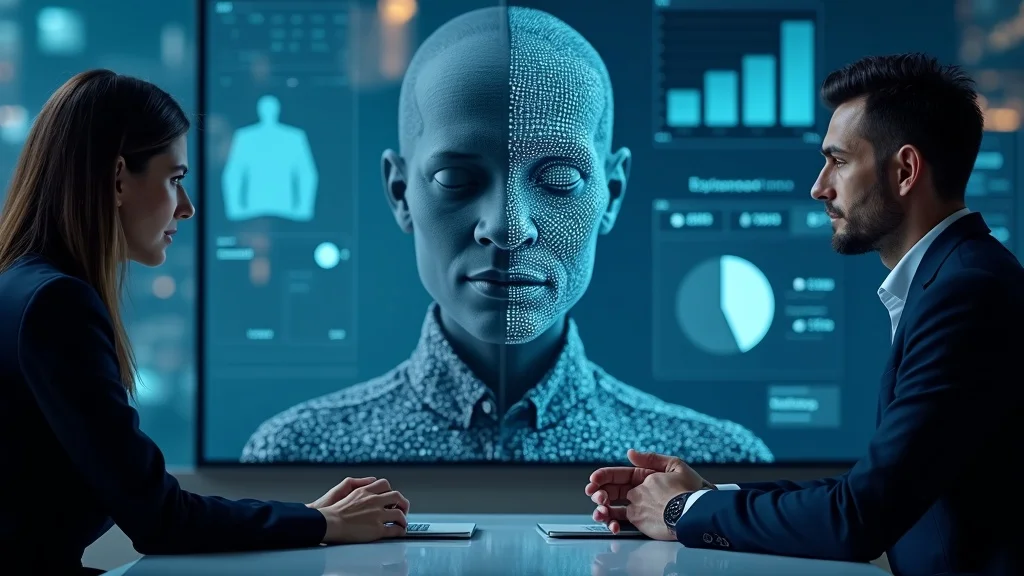
Key Takeaways: What a Snapshot of AI's Impact on Hiring Reveals
Generative AI is rewriting the rules of talent search and selection.
Labor market shifts require adaptation from both employers and job seekers.
Community impact and ethical questions demand careful consideration.
The future of work is collaborative—AI augments, not replaces, human decision-making.

Bringing It Together: Context, Community, and Your Next Steps
“AI offers promise, but it is community wisdom that will guide us forward.”
A true snapshot of AI’s impact on hiring can only be drawn in partnership with the communities doing the work. The most promising pattern? When organizations, candidates, and technologists practice empathy, transparency, and a willingness to learn, AI supports not just efficiency but dignity and growth.
If you’re inspired to further explore how AI is transforming not just hiring, but the broader landscape of organizational success, consider delving into the mindset shifts that drive sustainable adoption. Understanding the principles behind a healthy AI adoption mindset can empower leaders and job seekers alike to navigate change with confidence, resilience, and strategic vision. For a comprehensive perspective on cultivating this approach and unlocking the full potential of AI in your professional journey, visit this in-depth guide on developing a healthy AI adoption mindset. Embracing these insights can help you stay ahead of the curve and foster a culture of innovation and trust in the age of intelligent technology.
Ready to Go Deeper?
Schedule a 15 minute let me know further virtual meeting at https://askchrisdaley.com
Artificial intelligence (AI) is significantly transforming the hiring landscape, introducing both efficiencies and challenges. The article “Reinventing hiring for the AI-driven labor market” discusses how AI streamlines administrative tasks like resume screening and interview coordination, allowing HR professionals to focus on strategic talent development. It also addresses concerns about bias, emphasizing that careful AI implementation can enhance fairness and transparency in recruitment processes. (techradar.com)
Similarly, “Here are 5 great examples how AI is transforming HR software” highlights key areas where AI is reshaping human resources, including recruiting, onboarding, performance management, workforce planning, and employee engagement. The article underscores the importance of ethical considerations and human oversight to ensure AI’s responsible use in HR practices. (techradar.com)
For a comprehensive understanding of AI’s multifaceted impact on hiring, these resources provide valuable insights into both the benefits and challenges of integrating AI into recruitment processes.




Write A Comment